
AVDD Strait of Hormuz SITREP
12 May 2026

AVDD is producing this roundup of news stories related to the crisis in the Strait of Hormuz until it abates. If you find the SITREP informative, please share and subscribe to our Substack. We appreciate any feedback—thank you for your support!

12 May:
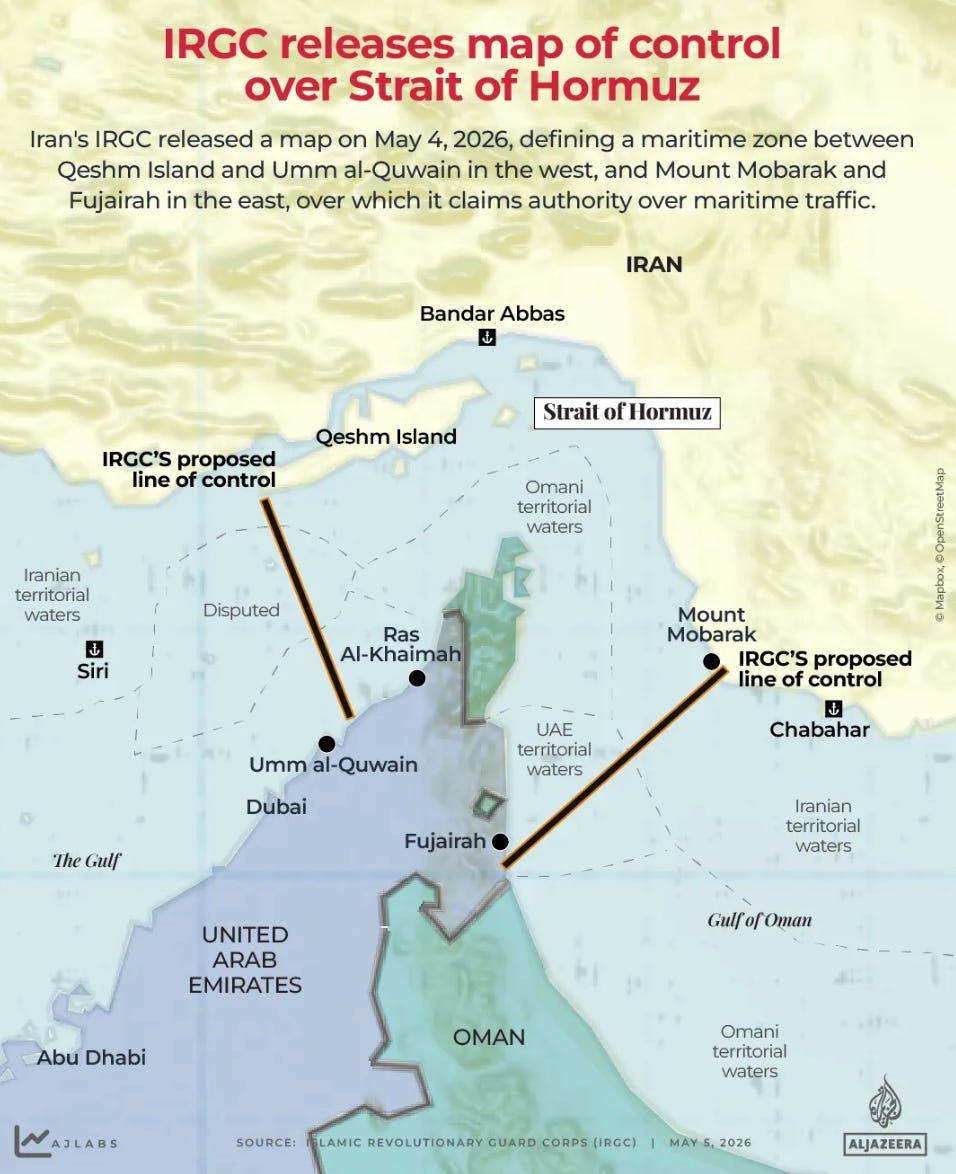
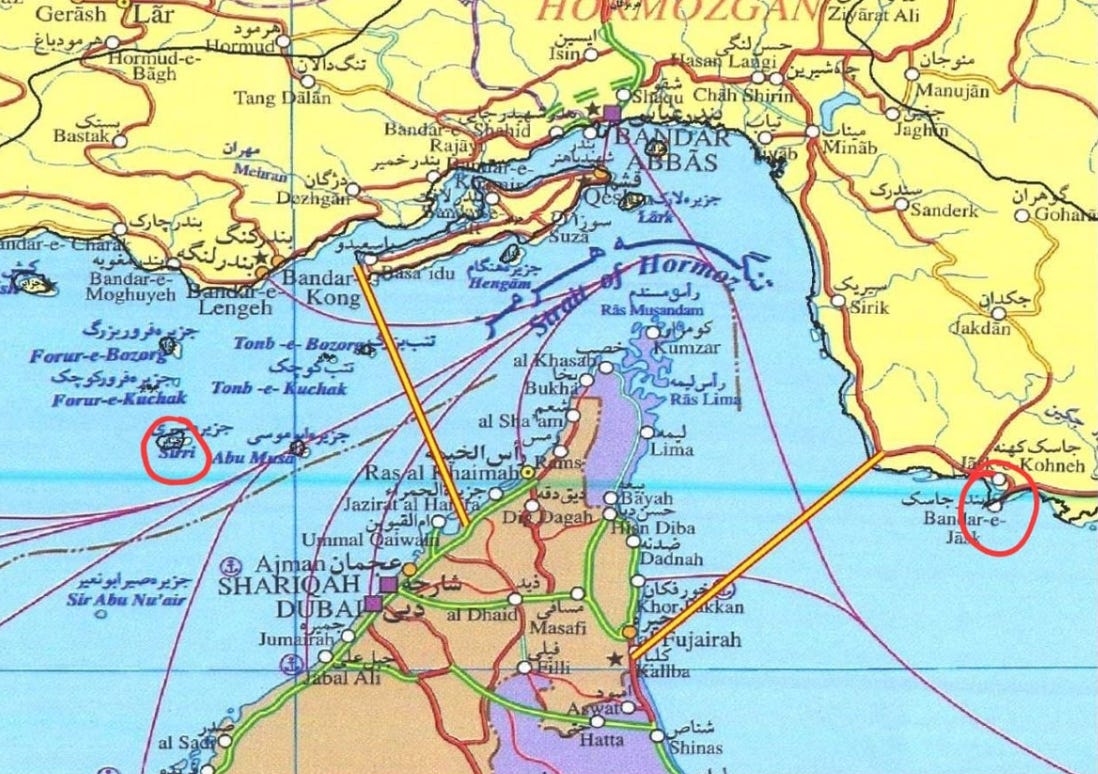
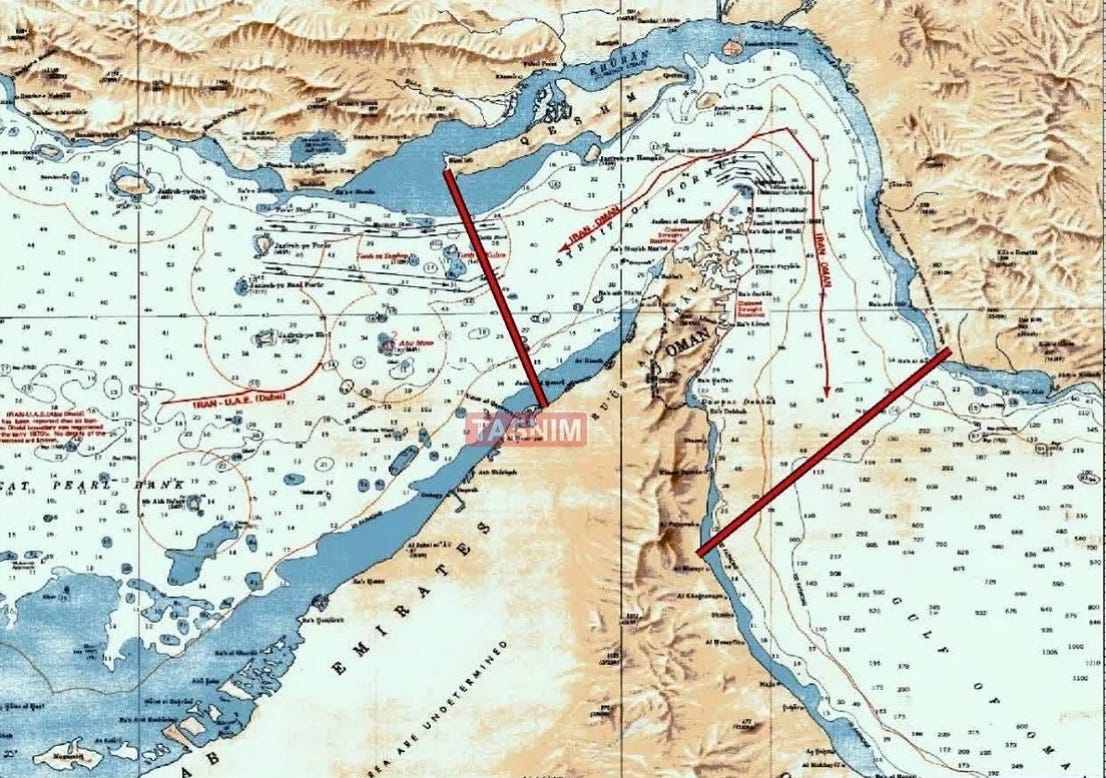
The Revolutionary Guard’s navy says its zone of control in the Strait of Hormuz “has significantly expanded” from the coasts of Jask to Sirri Island (see maps below).
Mohammad Akbarzadeh, political deputy of the Islamic Revolutionary Guard Corps navy, made the comments to the Tasnim News Agency. “[Before the war,] the Strait of Hormuz was considered a limited area around islands like Hormuz when defined, but today this perspective has changed,” Akbarzadeh was quoted as saying. The narrow waterway “has become larger and turned into a vast operational area”, he added.
Fars and Tasnim reported that the Strait’s width, which they said was previously estimated at 20 to 30 miles, had now increased to between 200 to 300 miles.
Iran’s parliament speaker, Mohammad Bagher Ghalibaf, says that Tehran is ready to respond to “any aggression”, which will leave the U.S. “surprised.”
An Iranian government spokesperson says Iran is keeping “its fingers on the trigger” but the focus remains on “sustainable peace and interests-based diplomacy”. “We fought the world’s greatest military power for 40 days, and we are still holding the trigger and waiting for a negotiated settlement,” Fatemeh Mohajerani was quoted as saying by the ISNA news agency.
Reuters reports that Asian currencies are reaching new lows because of the crisis. The Indonesian rupiah tumbled to a record low on 12 May. The currencies of India and the Philippines also recently hit new lows. Currencies in South Korea, Thailand and Malaysia are also under pressure.
The U.A.E.’s main gas producing complex, the Habshan site in the capital of Abu Dhabi, one of the world’s largest which was targeted by Iran during the war, will not resume full capacity until next year, according to ADNOC.
The Iranian government has said that internet access will return to normal in Tehran after the war with the US and Israel ends.
Pakistan plans to increase oil imports from Russia during the Strait of Hormuz crisis, Russia’s state-run TASS news agency reports, quoting Pakistan’s ambassador to Russia, Faisal Niaz Tirmizi. In April, Russia’s energy export revenue jumped 4 percent from the previous month to 733 million euros ($861m) a day, the highest in two and a half years.
Chinese airlines will raise fuel surcharges for domestic flights from 16 May as the Iran war keeps jet fuel prices up, after hiking the charges sixfold last month.
U.S. consumer prices likely rose at a solid pace for a second straight month in April, which would result in the largest annual increase in inflation in more than 2-1/2 years.
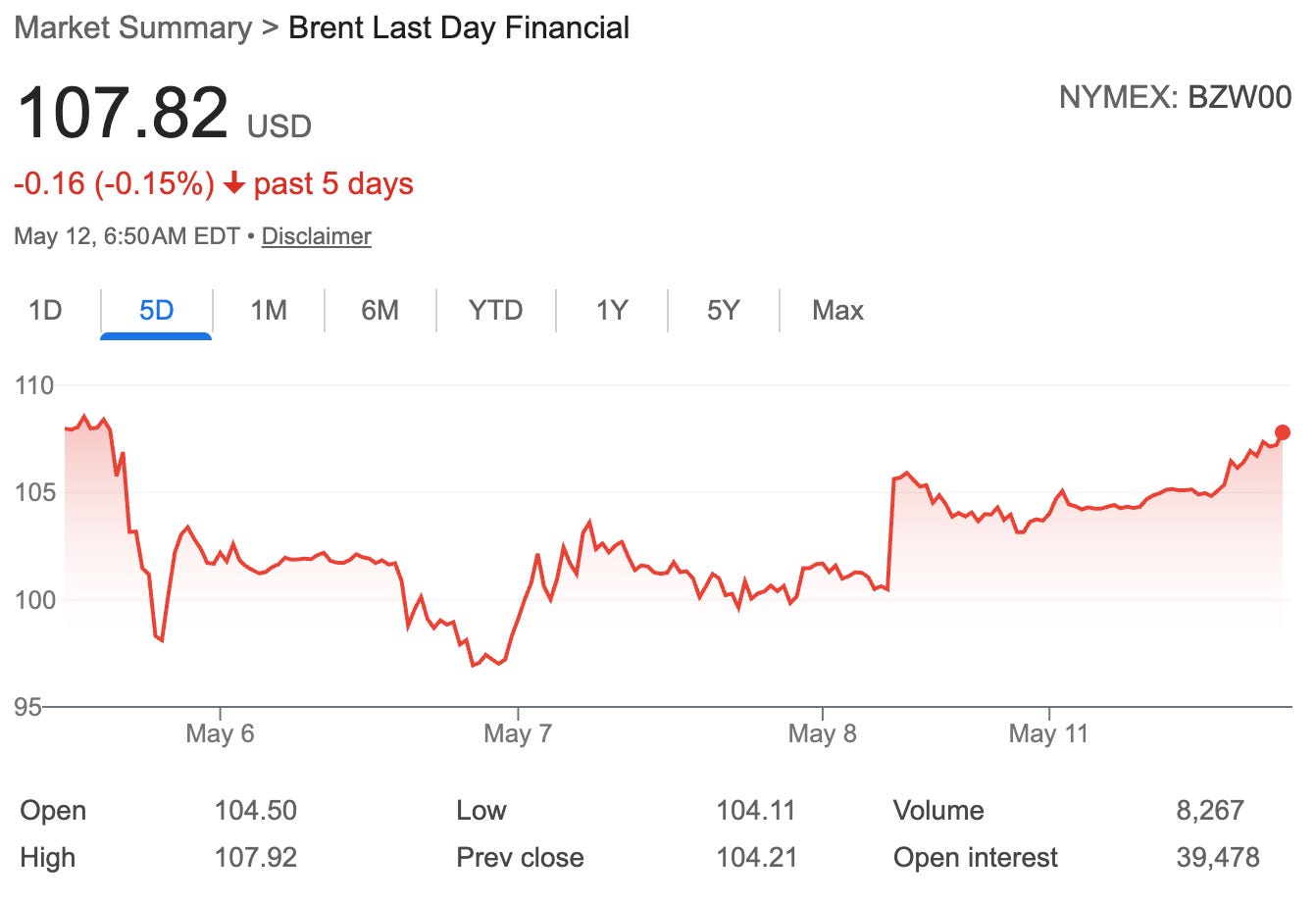
Brent crude climbed 2.7 percent (0700 EST) after President Trump called the Iran ceasefire “unbelievably weak.”
11 May:
Trump says he wants to suspend the U.S. gas tax “for a period of time” Suspending the gas tax would require an act of Congress. Currently the gas tax is 18.4 cents per gallon and 24.4 cents per gallon of diesel.
President Trump says that the Iran ceasefire is on “life support” after he rejected Tehran’s latest proposal to end the war the day before.
Iran’s Foreign Ministry spokesperson says that the United States continues to have “unreasonable demands”, adding that Iran’s response to the U.S. proposal was “not excessive”.
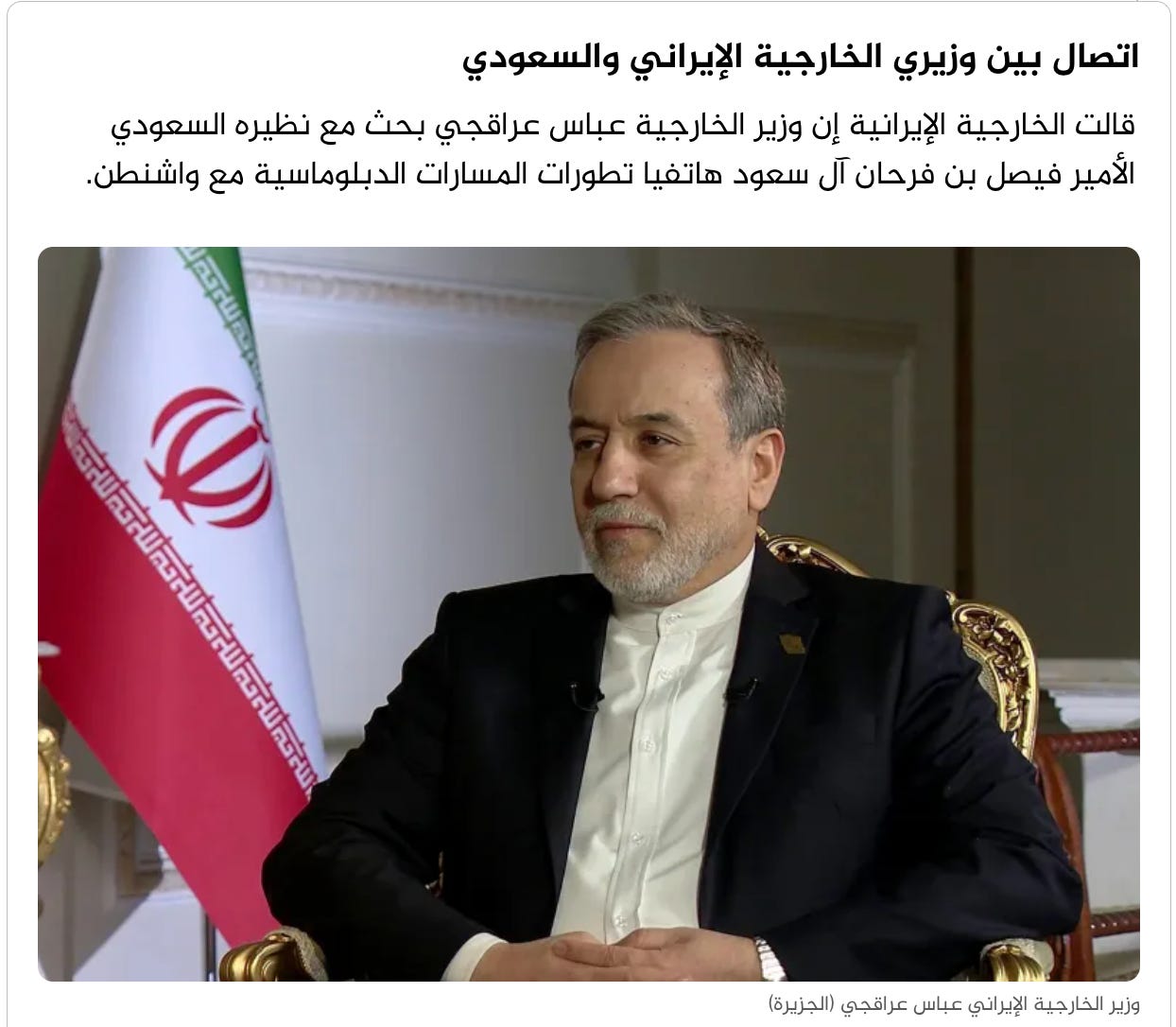
Iranian foreign minister Abbas Araghchi held a telephone call with his counterpart, Saudi Prince Faisal bin Farhan al Saud. The two discussed the diplomatic discussions with Washington to end the war, according to Al Jazeera.
China voiced strong opposition to U.S. sanctions against three China-based companies that Washington claimed enabled Iran’s military operations, calling the curbs illegal and unilateral.
A second Qatari LNG tanker was reportedly transiting the SoH days after another Qatari tanker crossed under an arrangement involving Iran and Pakistan. (The Mihzem vessel, with a capacity of 174,000 cubic metres, left Qatar’s Ras Laffan and was headed toward Port Qasim in Pakistan.
South Korea condemned a 4 May attack against a cargo ship operated by a Korean shipper and said that it plans to respond once the source of the attack is identified. The South Korean government delayed condemning the attack until a full investigation was completed.
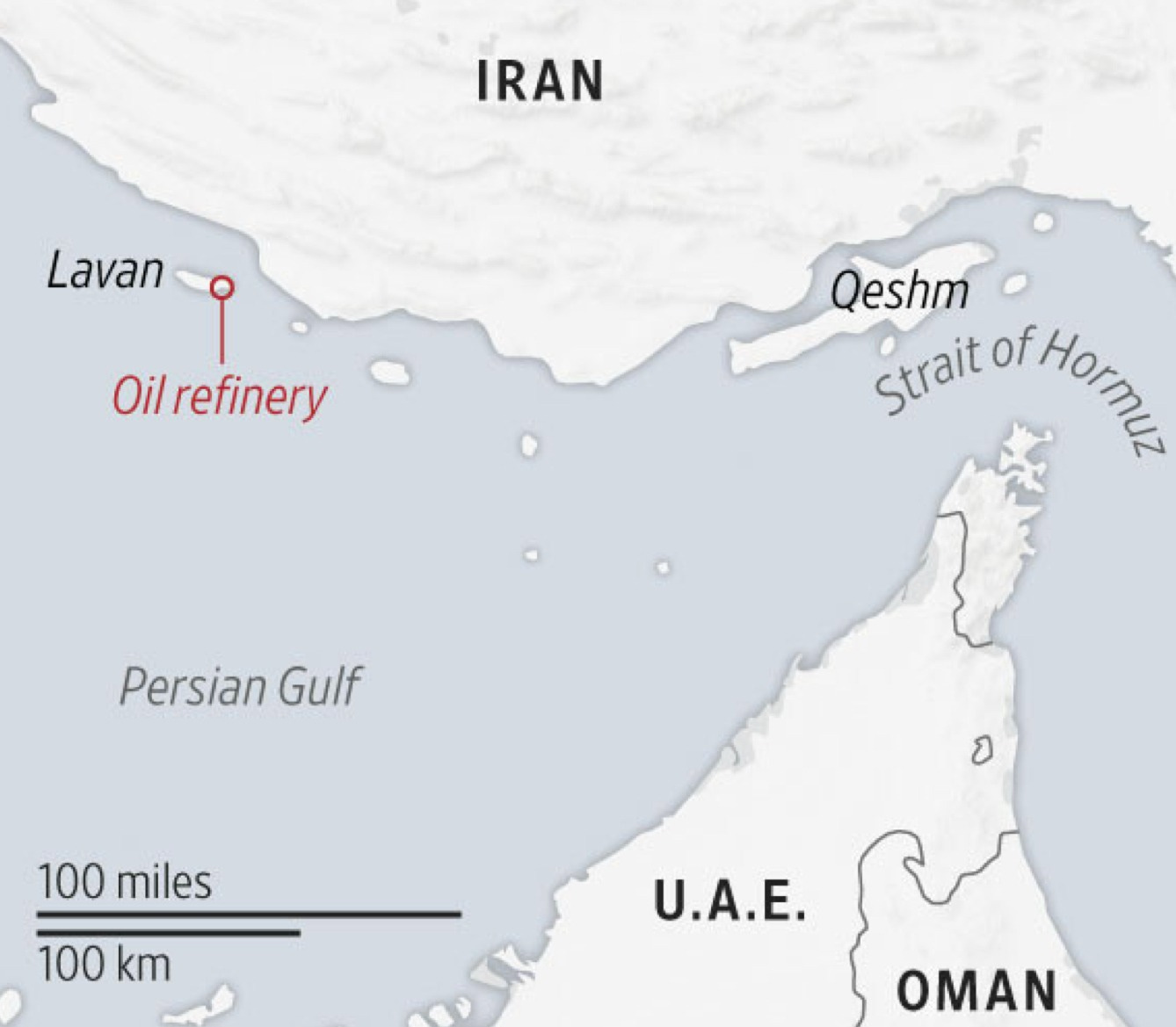
The Wall Street Journal reports that the UAE has carried out military strikes on Iran, including Iran’s refinery on Lavan Island in the Persian Gulf in early April. In addition to the strikes, the U.A.E. backed drafts of a resolution at the United Nations that authorized the use of force if necessary to break Iran’s chokehold on the SoH.
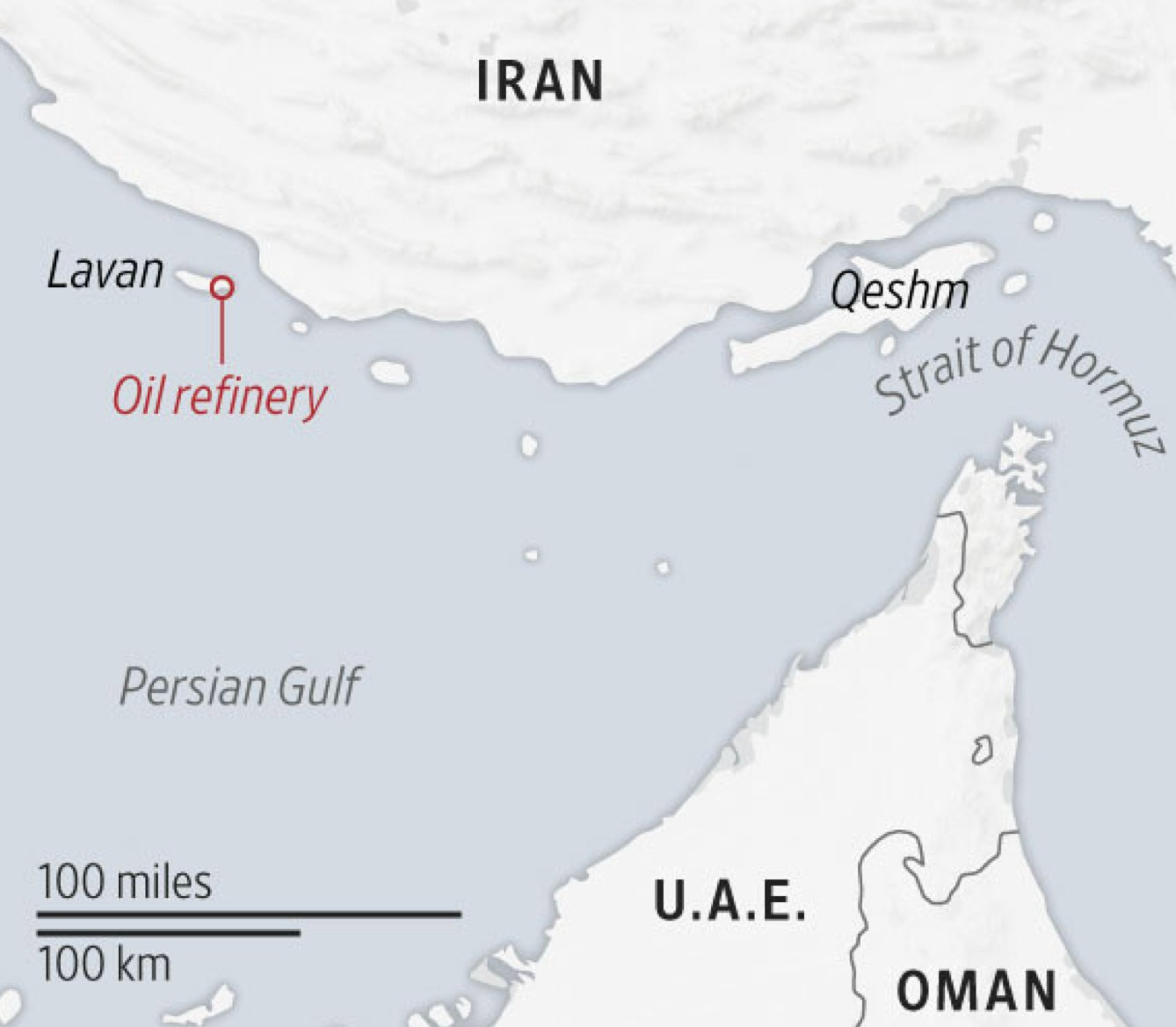
Source: The Wall Street Journal The Malta-flagged Agios Fanourios I, loaded with Iraqi crude and bound for Vietnam, passed through the Iranian-designated lane in the SoH, according to the semiofficial Iranian Tasnim News Agency. The Kiara M also reported to have transited the SoH.
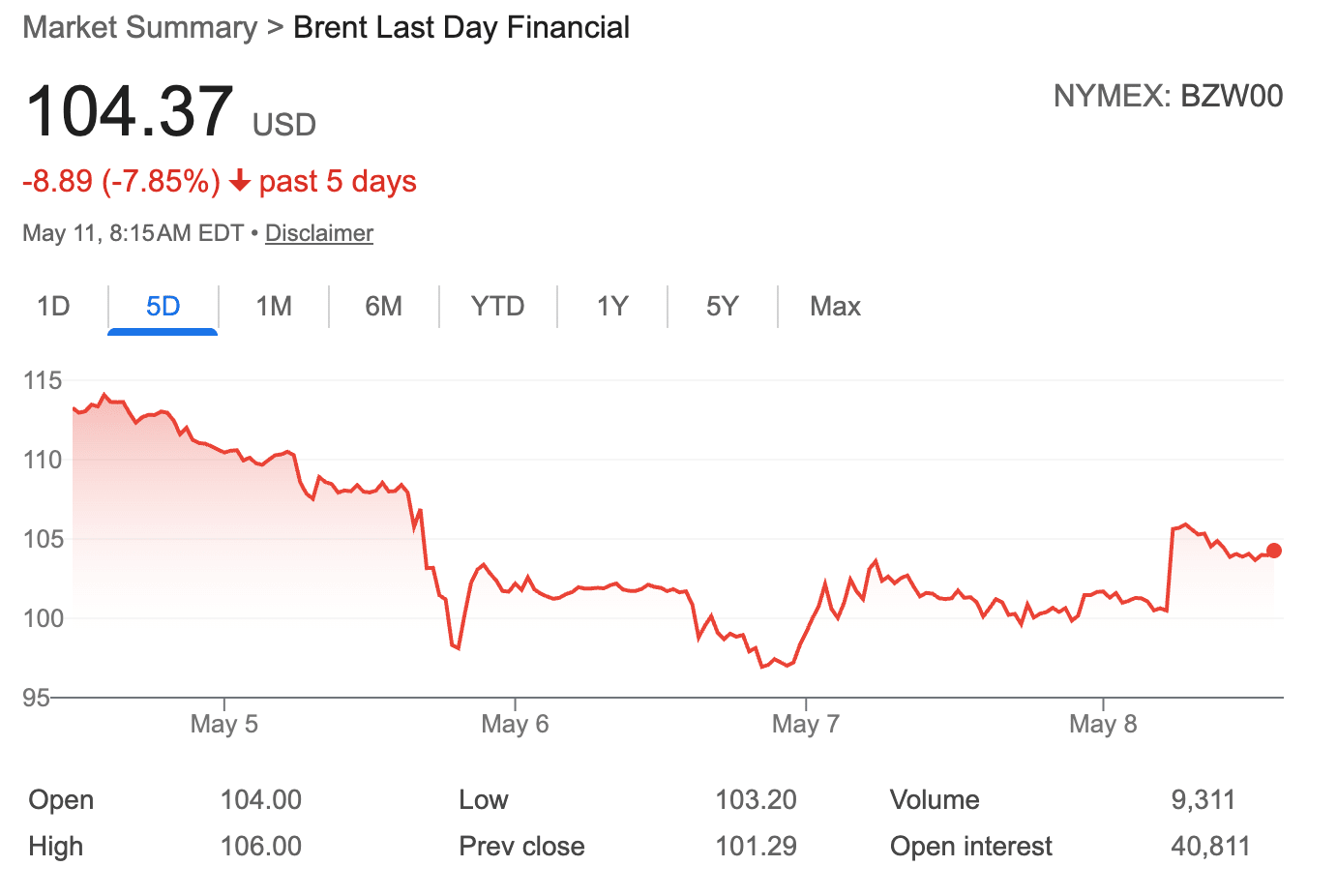
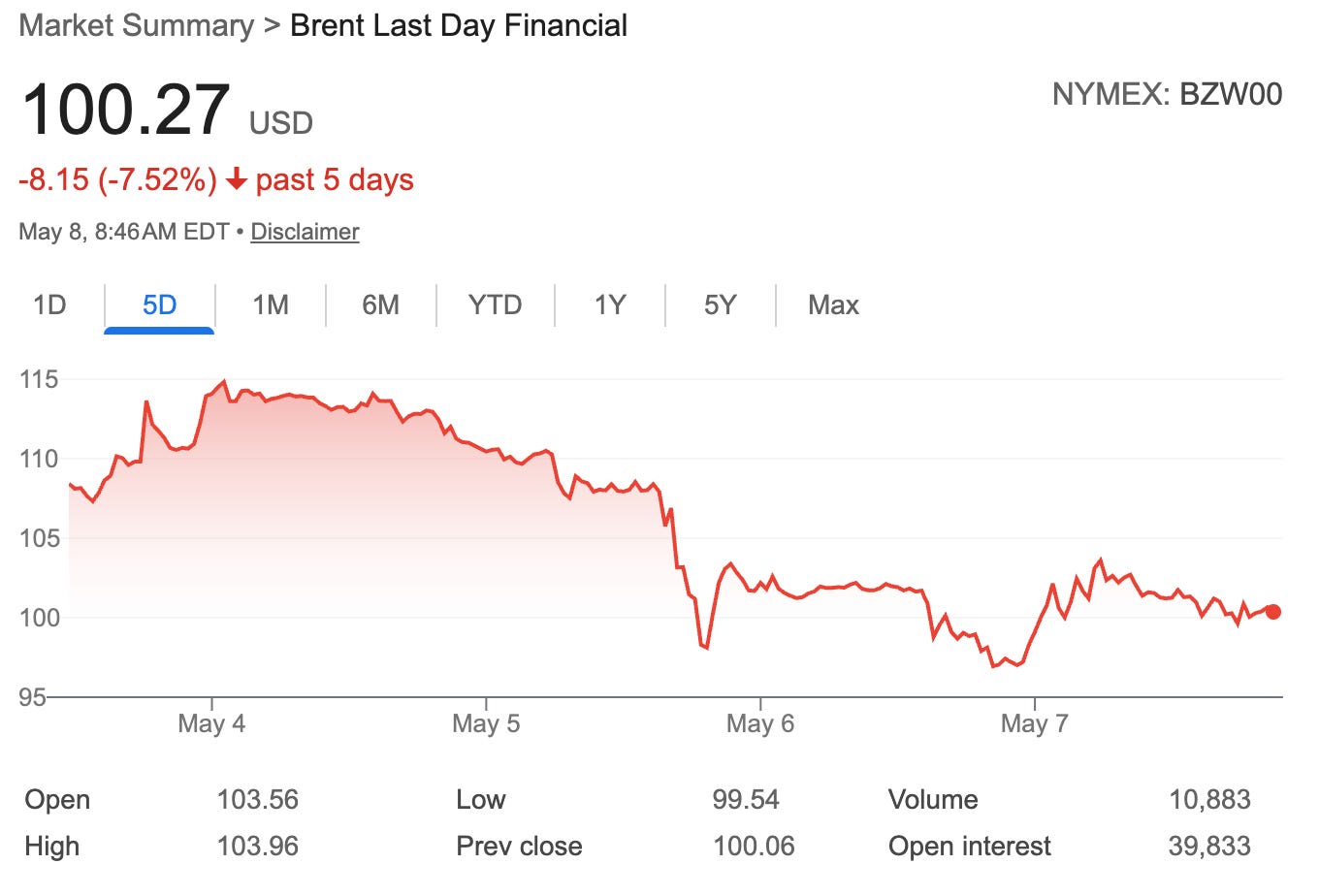
Brent crude futures hovered around $104 per barrel (0830 EST) on news of Trump’s rejection of Iran’s proposal
Indian PM Modi urged Indians not to buy gold for a year, reduce fuel consumption and reduce foreign exchange. He also encouraged work from home practices and for Indian farmers to cut their dependence on chemical fertilizers imported from abroad.
Note: 90 percent of India’s LNG imports come through the SoH.
Commentary: Iran Thinks Trump is Bluffing, The Wall Street Journal Editorial Board
By clinging to the cease-fire through it all, Mr. Trump sent the wrong signal. IRan’s regime clearly thinks it can outlast a President who no longer wants the fight. “They think that I’ll get tired of this or I’ll get bored, or I’ll have some pressure,” Mr. Trump reconized in his Monday remarks, but there’s no pressure at all. We’re going to have a complete victory.”
The problem is that he is under pressure, and everyone knows it. Why else is the President now talking about pausing the gas tax? Mr. Trump is right about the regime’s perception of him, but he’ll have to prove it wrong.
Trump is stuck in an Iran trap of his making. Here’s an escape plan. Ambassador John R. Bolton, The Washington Post
President Donald Trump is caught in an Iran war trap of his own making. He has for weeks been all-too-visibly eager for a deal allowing him to declare “victory” for … something. Conversely, he seems to deeply fear making a Barack Obama-like nuclear deal, and the inevitable (and justifiable) criticism. Good answers seem scarce, reinforcing his frustration. That was evident on Sunday when, posting online, he denounced as “TOTALLY UNACCEPTABLE!” Iran’s response to a U.S. framework to end the war. He must feel like George H.W. Bush, who once described himself as “one lonely little guy down here” at the White House…
…Trump has only two options consistent with U.S. national security. The first is declaring the much-violated ceasefire over and resuming destruction of Iran’s instruments of state power. U.S. critics of the U.S.-Israeli attacks, perhaps even Trump’s own CIA, believe much work remains before Iran’s military has been destroyed. Fine, let’s get on with it, while the already-assembled U.S. forces remain in the region.
If he can’t bring himself to take the big step, Trump’s other option is the smaller step of militarily opening the Strait of Hormuz to commerce with the Gulf Arabs, while still blockading Iran. At stake here is freedom of the seas, a foundation of U.S. foreign policy for 250 years and with enormous implications in other contested regions, such as the South China Sea. Moreover, enabling Gulf oil’s return to international markets would substantially relieve the current economic troubles. Maintaining the U.S. blockade, and expanding it by air where possible to Iran’s Caspian Sea ports, would further torque up economic pressure.
Most important, military action is necessary to restore deterrence. Tehran must learn with certainty it would suffer severe consequences for later trying to close the strait. Allowing merely a diplomatic end to this crisis, particularly under the “gradual” process apparently contemplated by Trump’s latest offer, would set a ruinous precedent. Emboldened as it now is, Iran’s regime would probably conclude it would face only diplomatic, not military, consequences for again closing the strait. Entirely predictably, Tehran could then open and close it like flipping a switch, raising or lowering the pressure as it saw fit.
10 May:
Iran’s response to the U.S. proposal to end the war focused on lifting the blockade on the Strait of Hormuz, but put off any decision on Iran’s nuclear program, an issue that is widely regarded as the main sticking point in the negotiations. The Iranian response also demanded war reparations, recognition of its sovereignty over the Strait of Hormuz, an end to U.S. sanctions and the release of Iran’s frozen assets. Iran also demanded an end to Israel’s operation in southern Lebanon.
Trump dismissed the Iranian response as, “TOTALLY UNACCEPTABLE.” In an interview Trump says that the U.S. has been surveilling Iran’s remaining enriched uranium stockpile and would, “get that at some point.” Trump also said, “They are defeated, but that doesn’t mean that they’re done.”
Qatar’s defense ministry states that a commercial cargo vessel coming from Abu Dhabi was struck by a drone off the coast of Doha, causing a small fire.
The NYT reports that Iran’s economy is buckling under wartime pressures, especially a country-wide internet blackout. One Iranian official estimated that the war had caused the loss of one million jobs.
Commentary: It’s hard to think of a time when the United States suffered a total defeat in a conflict, a setback so decisive that the strategic loss could be neither repaired nor ignored. The calamitous losses suffered at Pearl Harbor, the Philippines, and throughout the Western Pacific in the first months of World War II were eventually reversed. The defeats in Vietnam and Afghanistan were costly but did not do lasting damage to America’s overall position in the world, because they were far from the main theaters of global competition. The initial failure in Iraq was mitigated by a shift in strategy that ultimately left Iraq relatively stable and unthreatening to its neighbors and kept the United States dominant in the region.
Defeat in the present confrontation with Iran will be of an entirely different character. It can neither be repaired nor ignored. There will be no return to the status quo ante, no ultimate American triumph that will undo or overcome the harm done. The Strait of Hormuz will not be “open,” as it once was. With control of the strait, Iran emerges as the key player in the region and one of the key players in the world. The roles of China and Russia, as Iran’s allies, are strengthened; the role of the United States, substantially diminished. Far from demonstrating American prowess, as supporters of the war have repeatedly claimed, the conflict has revealed an America that is unreliable and incapable of finishing what it started. That is going to set off a chain reaction around the world as friends and foes adjust to America’s failure. –Robert Kagan, Checkmate In Iran, The Atlantic
9 May:
Marco Rubio and Steve Witkoff meet with Qatari Prime Minister Mohammed bin Abdulrahman to discuss efforts to end the war.
NYTs reports that Russia is using the Caspian Sea to quietly move military and commercial supplies to Iran, helping Tehran bypass U.S. sanctions.
8 May:
U.S. warplanes strike two Iranian-flagged tankers (Sea Star III and Sevda) that were attempting to violate the U.S. blockade and enter an Iranian port. According to CENTCOM, a U.S. Navy F/8-18 Super Hornet from the USS George H.W. Bush struck both vessels’ smokestacks with precision munitions, preventing them from reaching Iran.
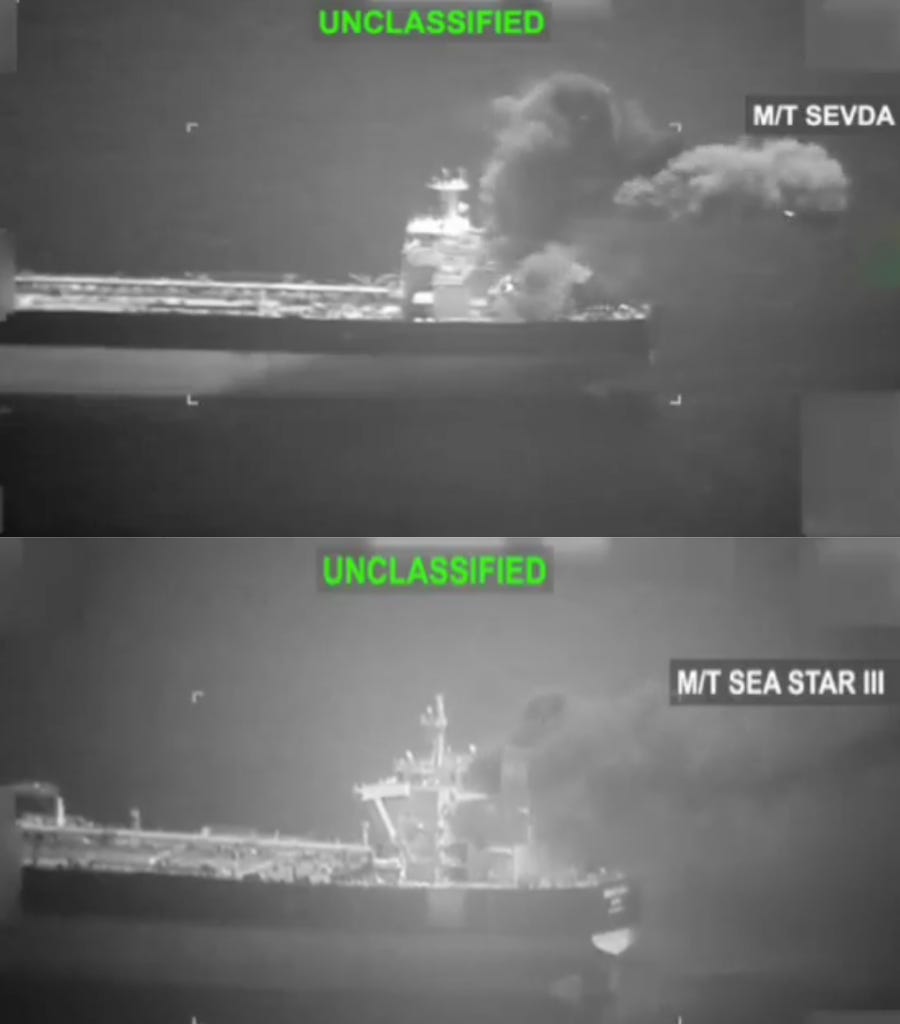
The U.S. announced new sanctions on Iran designed to target Iran’s military industrial supply chain and people and companies in China and Hong Kong that were allegedly helping the Iranian military gain access to supplies and war equipment.
A Qatari LNG tanker, Al Kharaitiyat, crossed the SoH via the Iranian-approved northern route.
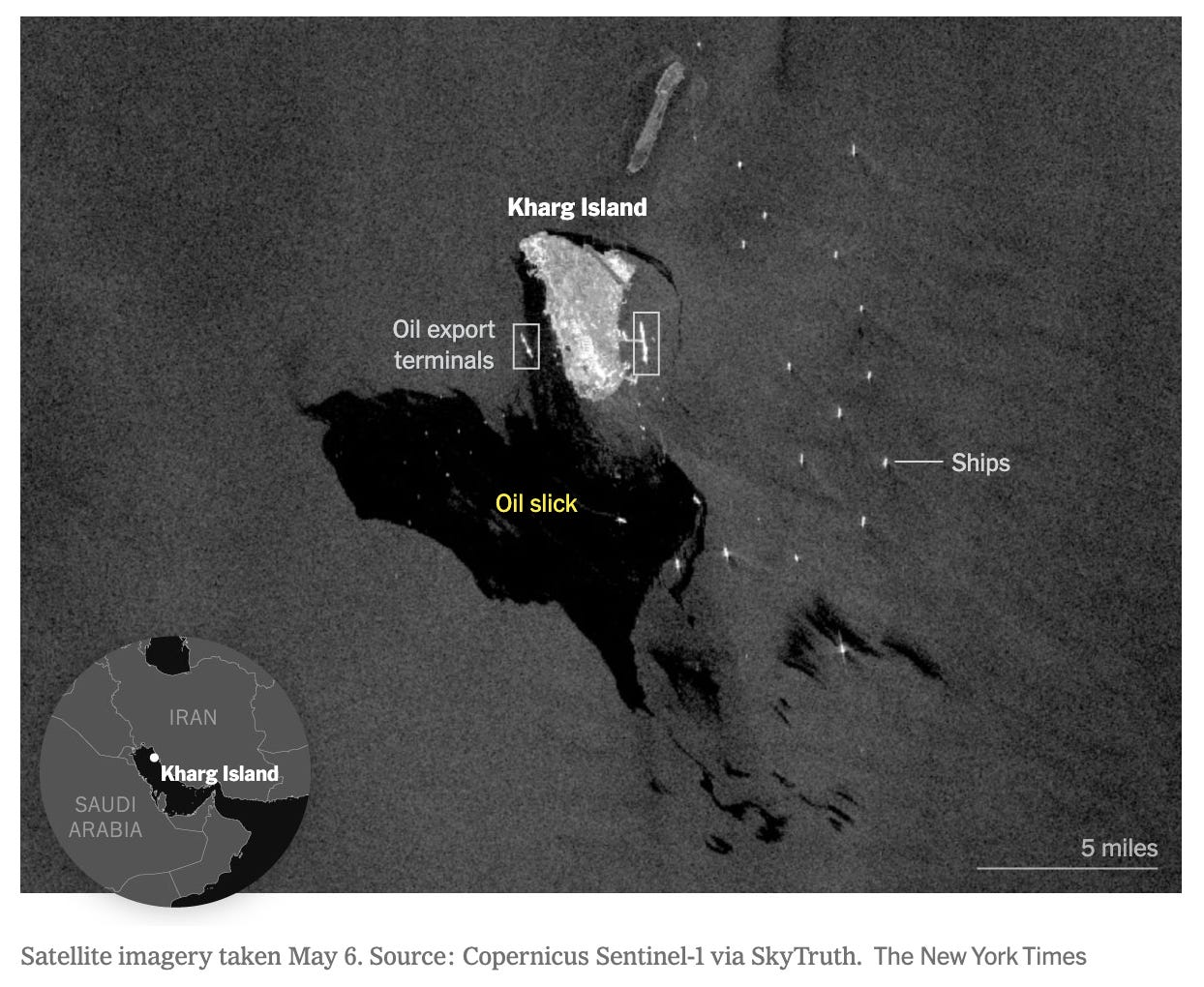
The New York Times and other media report that a large oil spill was spreading off Kharg Island. The spill had spread to 20 square miles in size. The exact cause of the spill was unclear.
Reports of additional, likely U.S., attacks on Bandar Abbas and Qeshm in southern Iran.
The State Department posts a statement from Marco Rubio: “Iran is trying to establish some agency that’s going to control traffic in the Strait. That would be very problematic. The normalizing of their control of international waterways is both illegal and absolutely unacceptable.”
Iran’s foreign minister, Abbas Araghchi, accused the United States of undermining diplomatic efforts, saying “Every time a diplomatic solution is on the table, the U.S. opts for a reckless military adventure.”
The UAE ministry of defense announces that its air defenses intercepted two ballistic missiles and three UAVs coming from Iranian territory.
China’s foreign ministry confirms that a tanker carrying a Chinese crew was attacked in the SoH. According to Reuters, the ship was marked “CHINA OWNER & CREW” and its deck was on fire.
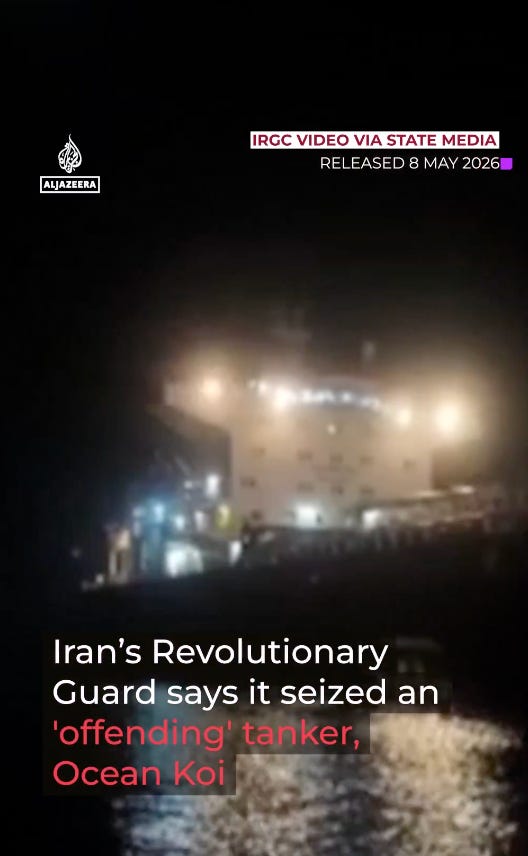
Iran seizes Barbados-flagged tanker oil tanker Ocean Koi over an alleged attempt to disrupt Iran’s oil exports, the semi-official Fars news agency reports.
Three cargo-empty National Iranian Tanker Company (NITC) tankers infiltrated the US Navy blockade line, according to TankerTrackers.com, inc.
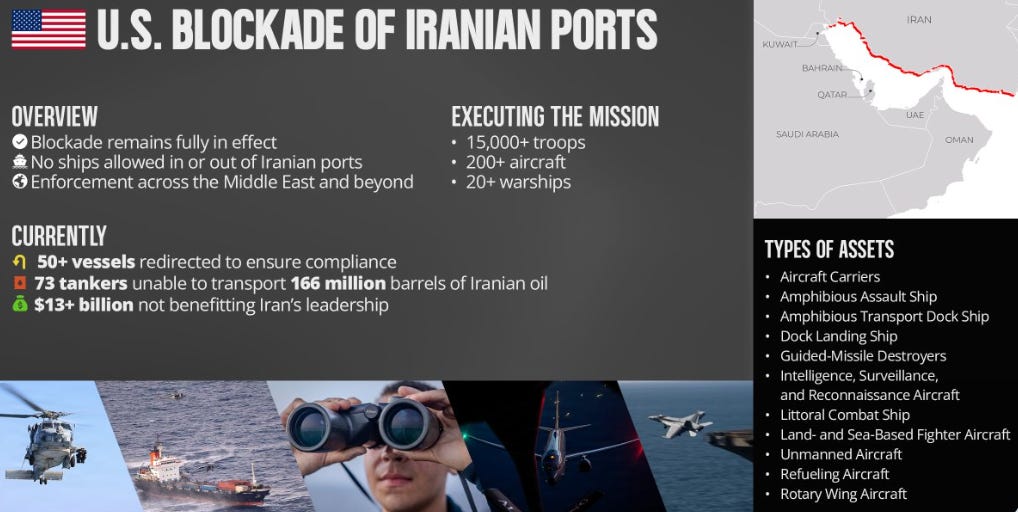
CENTCOM: There are currently more than 70 tankers that U.S. forces are preventing from entering or leaving Iranian ports. These commercial ships have the capacity to transport over 166 million barrels of Iranian oil worth an estimated $13 billion-plus.
Saudi Arabia and Kuwait lift restrictions on the U.S. military’s use of their bases and airspace imposed at the start of Project Freedom.
The EU Aviation Safety Agency (EASA) cleared the way for the possible use of US jet fuel in the bloc, which is seeking ways to confront the threat of fuel shortages due to the war, especially Jet A-1 grade fuel.
China announces that it is raising retail gasoline prices by 320 yuan ($47.02) per metric ton, starting 9 May, retail diesel to be raised to 310 yuan ($44.55) per metric ton.
Brent crude was hovering around $100 per barrel as of 0900 EST.
7 May:
Three U.S. Navy destroyers were attacked as they moved through the SoH. According to a CENTCOM statement:
TAMPA, Fla. — U.S. forces intercepted unprovoked Iranian attacks and responded with self-defense strikes as U.S. Navy guided-missile destroyers transited the Strait of Hormuz to the Gulf of Oman, May 7.
Iranian forces launched multiple missiles, drones and small boats as USS Truxtun (DDG 103), USS Rafael Peralta (DDG 115), and USS Mason (DDG 87) transited the international sea passage. No U.S. assets were struck.
U.S. Central Command (CENTCOM) eliminated inbound threats and targeted Iranian military facilities responsible for attacking U.S. forces including missile and drone launch sites; command and control locations; and intelligence, surveillance and reconnaissance nodes.
CENTCOM does not seek escalation but remains positioned and ready to protect American forces.
The U.S. responds to the attacks, striking an Iranian port at Qeshm Island and Bandar Abbas. A U.S. official tells Fox News that the U.S. struck Bahman Port on Qeshm Island and other targets (see map below).
Iranian Khatam al-Anbiya Central HQS claims that the U.S., with several regional countries, attacked an Iranian oil tanker in the SoH, as well as the cities of Minab, Bandar Abbas, Khamir, Sirik and Qeshm. Iranian air defenses were active over western Tehran.
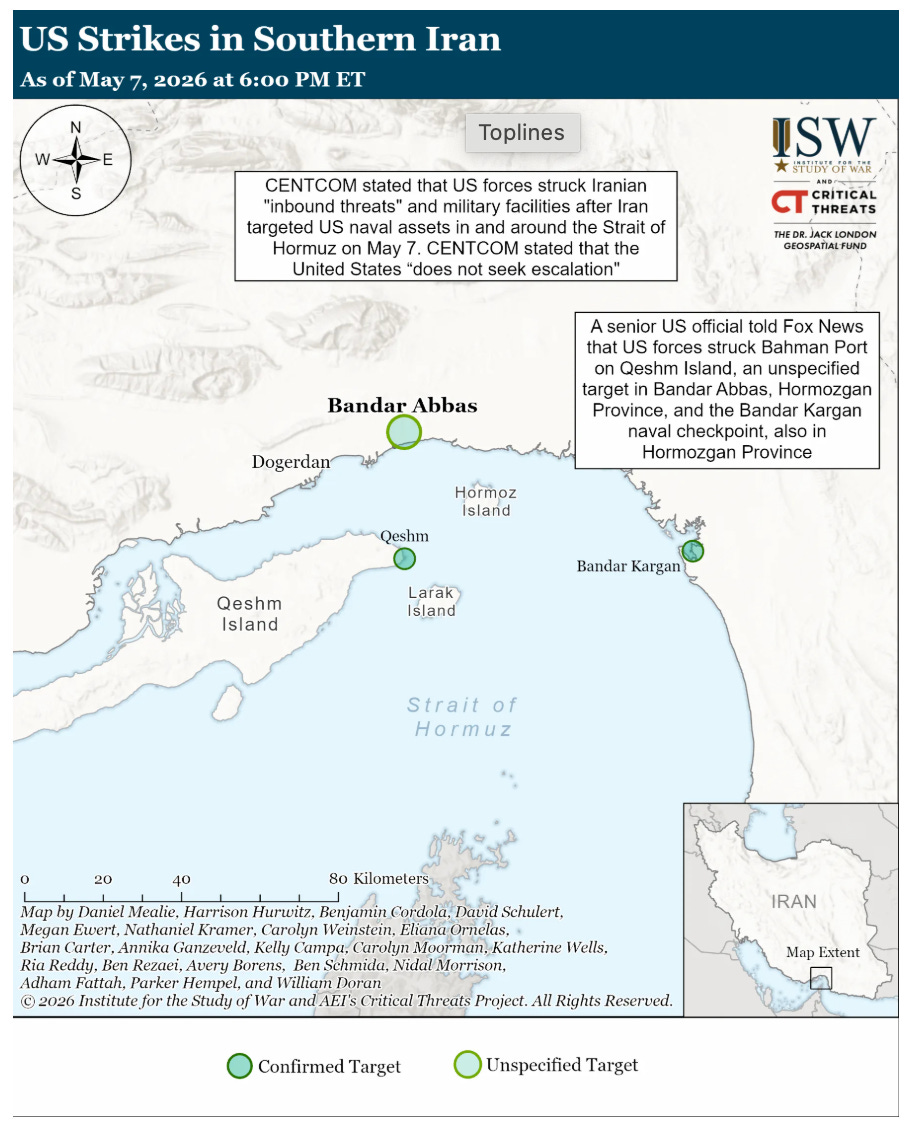
President Trump calls the Iranian attacks “just a love tap” and says that the ceasefire is still in effect.
A Chinese tanker with Chinese crew was attacked in the SoH.
For the second day in a row no commercial ships transit the SoH.
According to multiple reports, Iran is still reviewing the latest U.S. proposal to end the war. Iranian foreign minister Abbas Araghchi called for “dialogue and diplomacy” in a call with his Pakistani counterpart.
A spokesman for Pakistan’s foreign ministry, Tahir Andrabi, said that Islamabad was optimistic about a deal, saying, “We expect an agreement sooner rather than later.”
Iran’s President Masoud Pezeshkian said he met with Iranian Supreme Leader Mojtaba Khamenei. This was the first time that an Iranian leader publicly acknowledged meeting personally with Khamenei. The date of the meeting was not disclosed.
The UAE announced that it was establishing a national committee to document Iranian acts of aggression, international crimes, and the resulting damage.
NBC reports that Trump paused his plan to reopen the Strait of Hormuz (Project Freedom) after Saudi Arabia blocked the U.S. military from using its bases and airspace for the operation. The restriction cut off critical access needed for aircraft, refueling, and protection missions, forcing the White House to halt the operation shortly after it began.
The Washington Post reports that a CIA assessment concluded that Iran can survive the U.S. naval blockade for at least three to four months before facing severe economic hardships. The report also concluded that Iran retains significant ballistic missile (75 percent of its prewar launchers and 70 percent of its missile) capability despite intense U.S. and Israeli bombing
Israel again issued forced displacement orders for people living in the southern Lebanese towns of Deir al-Zahrani, Bafroa and Habush. The Israeli military claims the Lebanese armed group Hizbollah is violating the “ceasefire”.
6 May:
Axios reports that the U.S. and Iran are close to an agreement on a 14-point memorandum of understanding to end the war. The agreement would have Iran commit to a moratorium on nuclear enrichment, with the U.S. lifting sanctions and releasing billions in frozen Iranian funds, among other issues. Both sides would lift restrictions on maritime traffic through the Strait of Hormuz.
Trump says that Project Freedom will be suspended, issuing the following Truth Social post:
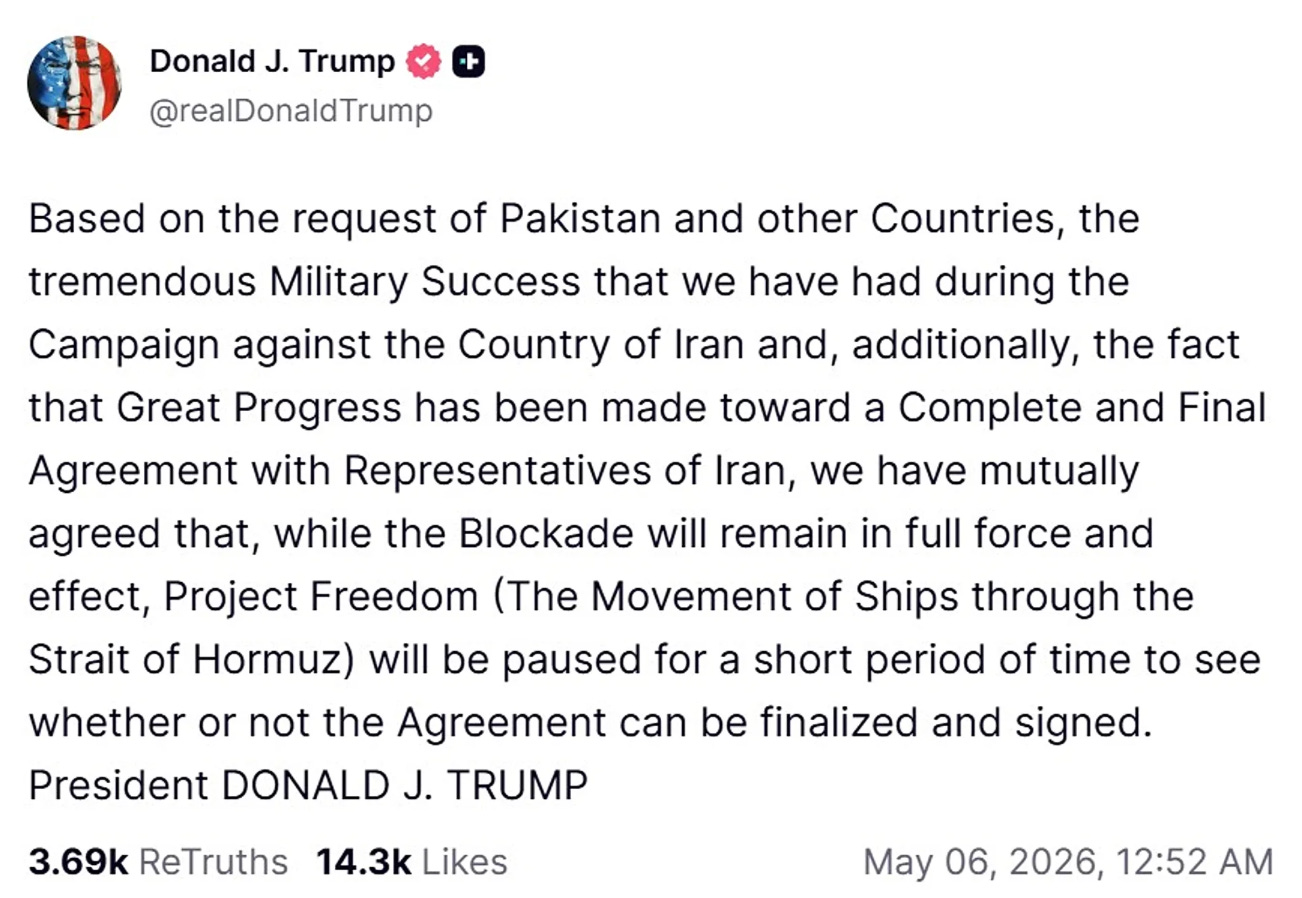
Later, Trump says that Iran will be bombed “at a much higher level” if the regime does not agree to a peace deal. Following that, Trump posts, “If they don’t agree, the bombing starts.”
Iran did not immediately respond to Trump’s statements. Rather, Iranian state news agency (IRNA) claimed that the Strait of Hormuz would be controlled under a new system that “will likely reflect a new balance of power and security considerations” in the region, with bordering states Iran and Oman playing a central role.
The IRGC posted: “We thank captains & shipowners in Persian Gulf & Gulf of Oman for complying with Iran’s Strait of Hormuz regulations & contributing to regional maritime security. With aggressor’s threats neutralized & new protocols in place, safe, stable passage through SOH will be ensured.”
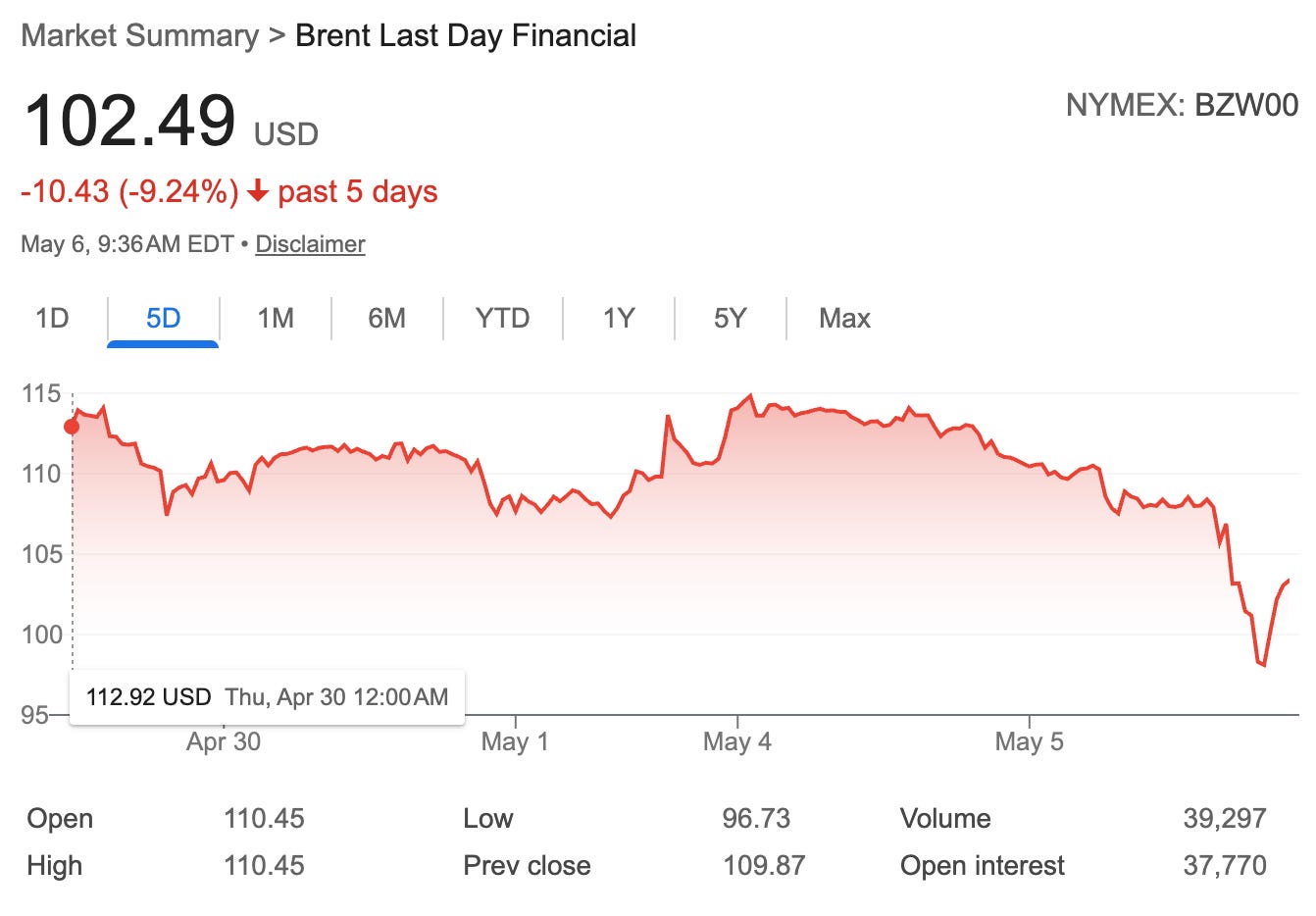
News of a possible peace deal causes global oil prices to fall, with benchmark Brent crude falling to around 100 dollars per barrel.
An Iranian Oil Ministry official tells The New York Times that Iran will run out of onshore and offshore oil storage within 40-45 days, forcing it to begin closing oil wells. Some oil well closures will be permanent.
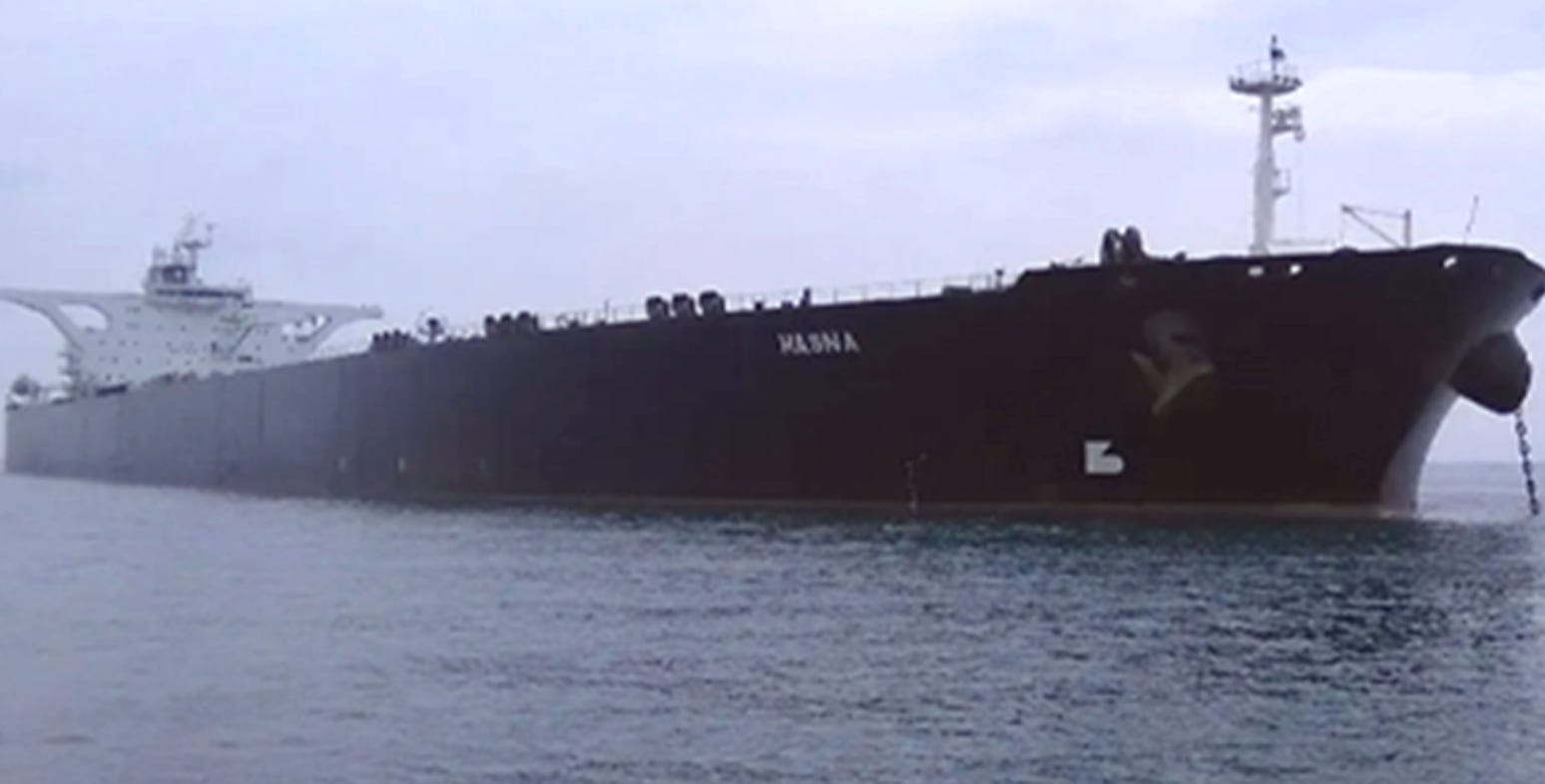
In the second incident of U.S. forces firing on a ship attempting to break the U.S. blockade on Iran, U.S. forces fired on an Iran-flagged very large crude carrier, the Hasna in the Gulf of Oman. CENTCOM stated that the ship was en route to an Iranian port on the Gulf of Oman and failed to comply with repeated warnings. A U.S. F-18 Super Hornet fired its cannon gun at the tanker and disabled its rudder.
The Basrah Energy, loaded with 2 million barrels of crude from Abu Dhabi National Oil Co Zirku terminal, exits the SoH.
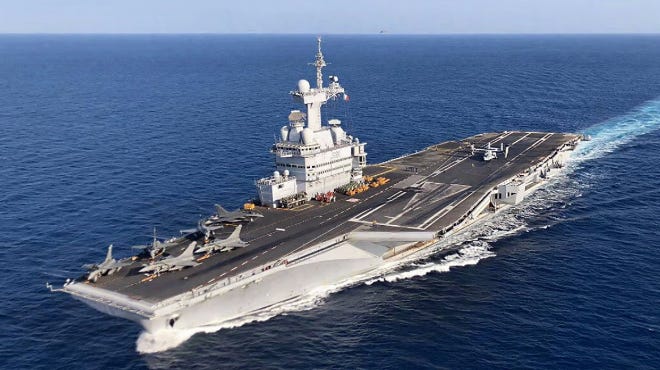
France’s only aircraft carrier, the FS Charles de Gaulle crosses the Suez Canal en route to the Red Sea. The French Ministry of Defense that the carrier group will stage in the Southern Red Sea/Gulf of Aden area in preparation for a future freedom of navigation operation in the Strait of Hormuz.
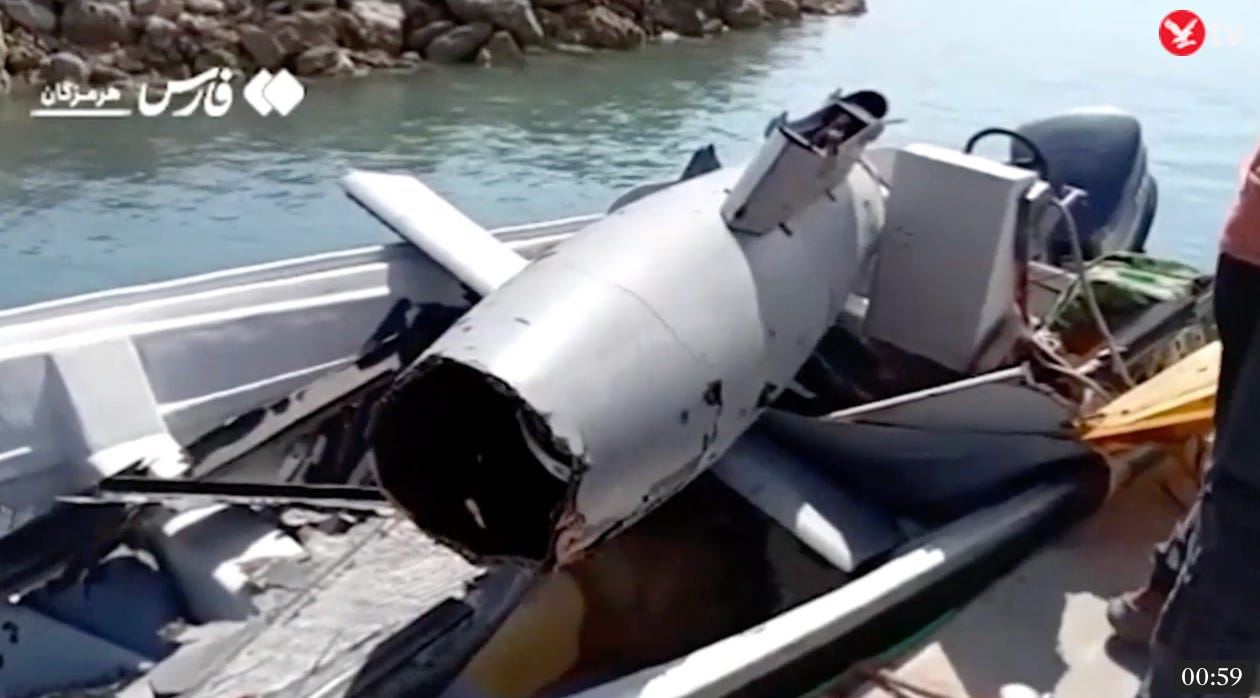
Iran releases footage of what it claims to be a reconnaissance drone that it claimed to have shot down over the Strait of Hormuz. According to an analyst quoted in the Independent the object resembled an external fuel tank of a General Atomics MQ-9A Reaper–also known as a Predator B–which is operated by the U.S.
Chinese foreign minister Wang Yi, following a meeting with his Iranian counterpart Abbas Araghchi, called for “an immediate end to hostilities” and a “prompt resumption of shipping traffic through the Strait of Hormuz.” He also stated that his country was, “deeply distressed by the conflict.”
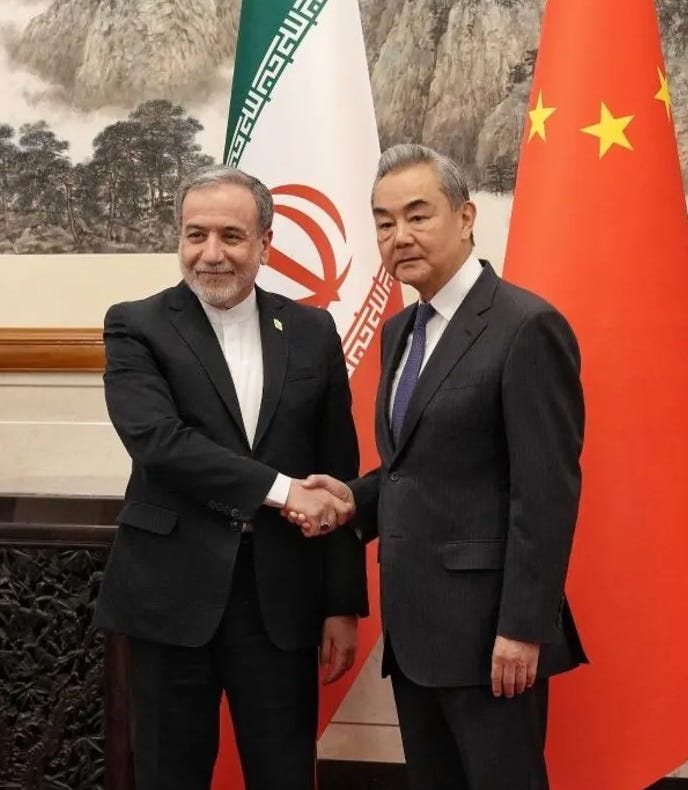
Note: Trump is slated to visit China on 14-15 May. China recently pushed back against Washington’s sanctions on Chinese refiners that buy Iranian crude, issuing a “blocking rule” directing companies not to comply with U.S. sanctions.
The Washington Post reports that, according to an analysis of satellite imagery, Iran damaged or destroyed 228 structures or pieces of equipment at U.S. military sites across the Middle East, far more than what the U.S. government had previously acknowledged.
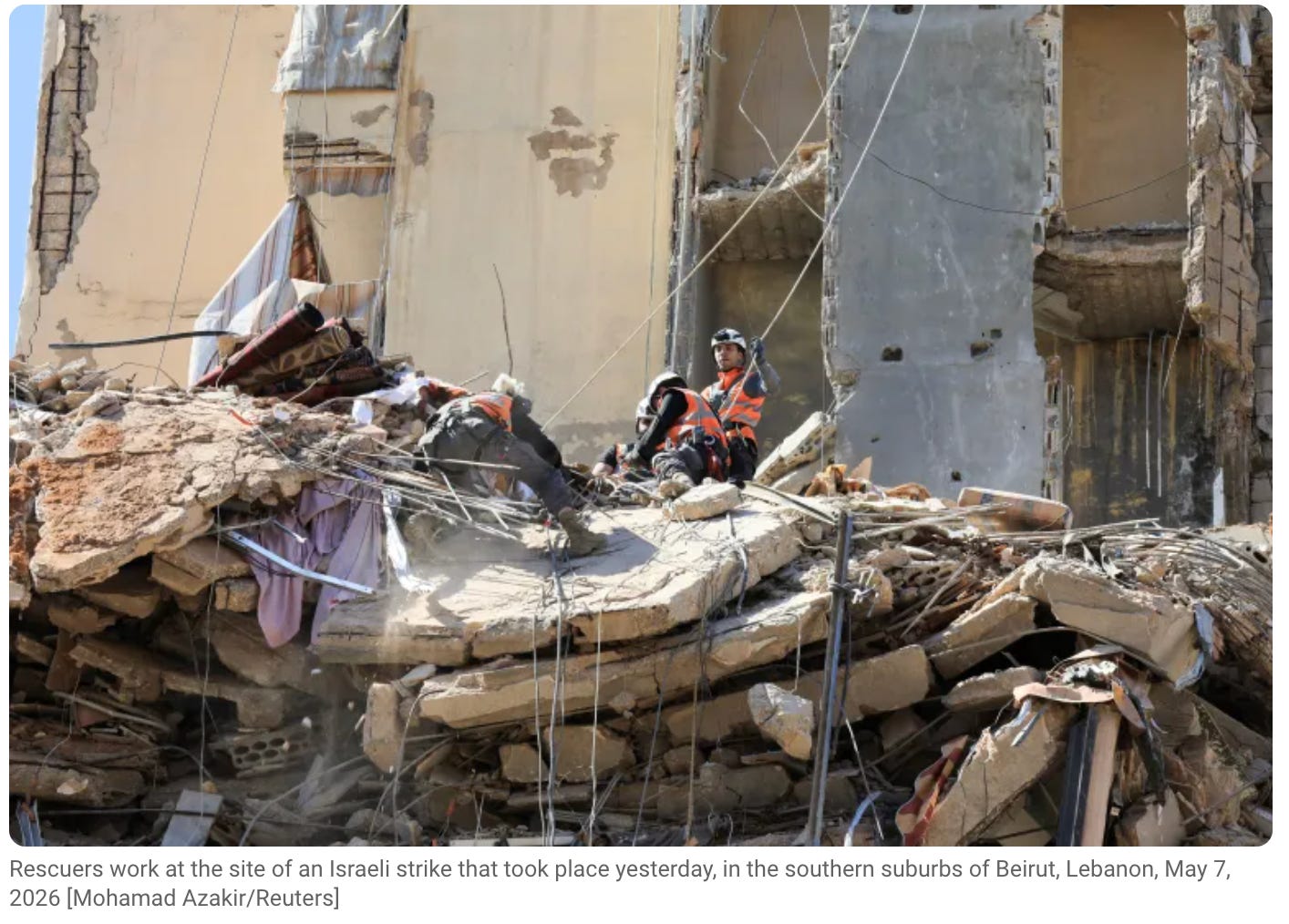
Israel strikes Beirut for the first time since a 17 April ceasefire went into effect, killing the commander of Hizbollah’s elite Radwan Force.
According to the WSJ: “Late Friday, an Iranian official detailed Khamanei’s injuries for the first time, saying his kneecap and back had been wounded in the strike that killed his father. The official insisted he was in good health.”
5 May:
During a White House press briefing Secretary of State Marco Rubio declares that Operation Epic Fury had concluded.
For a second day in a row Iran launches missiles and drones at the UAE. No reporting of significant damage. Washington states that the attacks of the past two days were not significant enough to constitute a breach of the ceasefire.
During a press conference SecDef Pete Hegseth stated that Project Freedom will reopen the Strait of Hormuz to the hundreds of ships trapped in the Persian Gulf. Hegseth stressed that the operation was defensive and would be temporary in duration. “We are not looking for a fight, but Iran also cannot be allowed to block innocent countries and their goods from an international waterway.” He also stated that, “What we are demonstrating with Project Freedom is they [Iran] don’t control the Strait.”
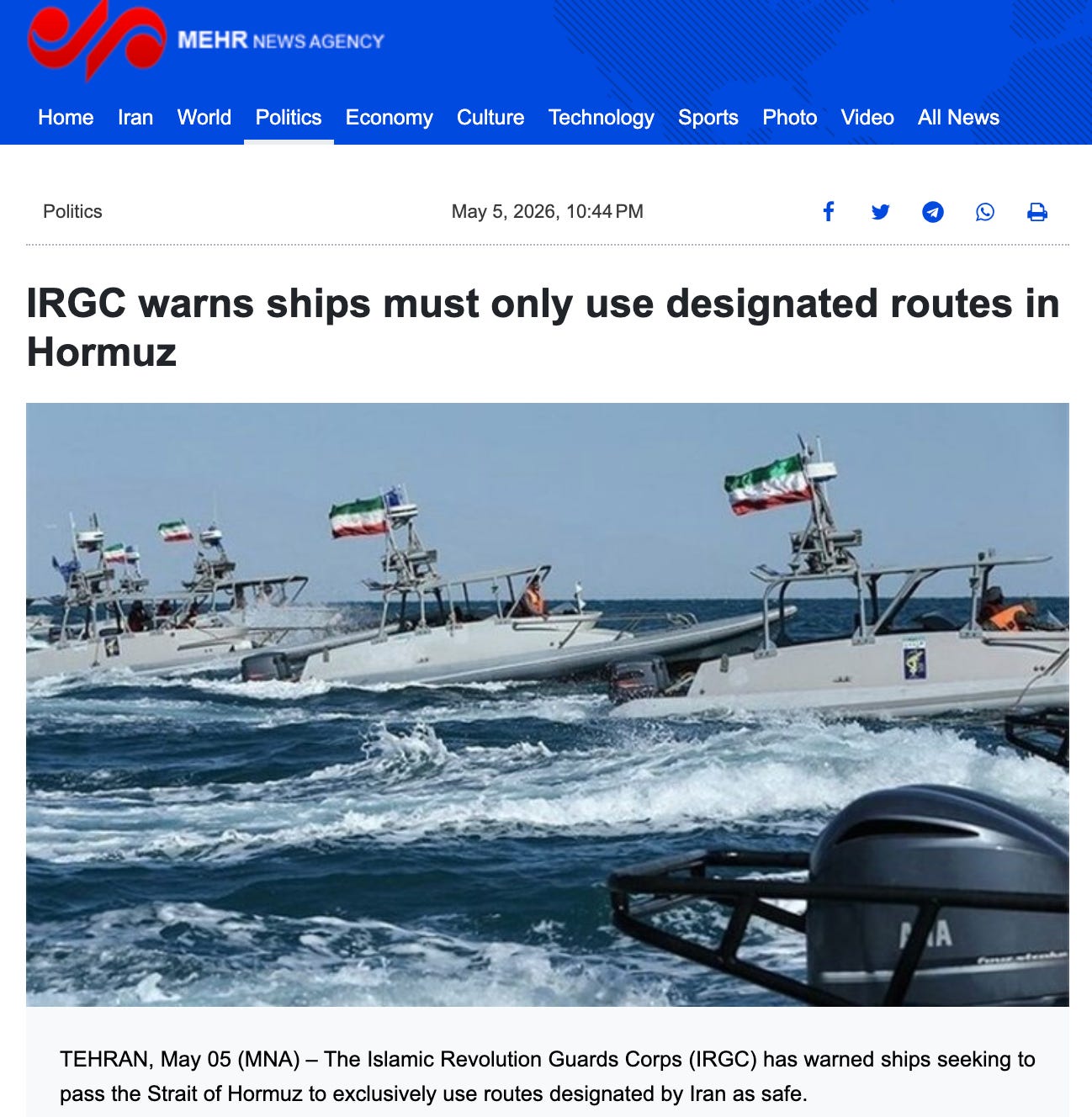
The IRGC said in a statement that it would deal decisively with ships avoiding the Iranian-designated corridors. “Any deviation by vessels to other routes will be unsafe and will be met with a decisive response from the IRGC Navy,” said the statement…the only safe route for passing through the Strait of Hormuz is the corridor previously announced by Iran.”
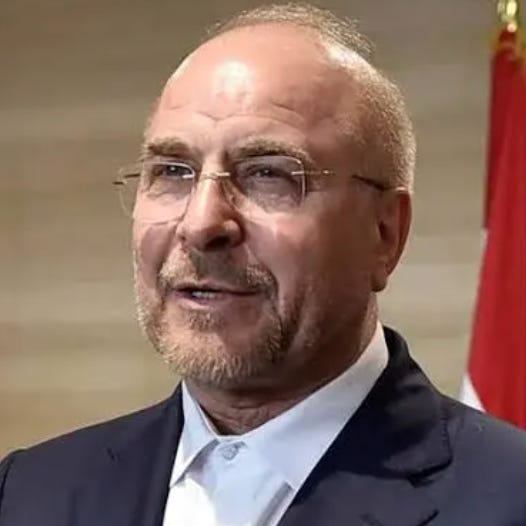
Mohammad-Bager Ghalibaf, Iranian Parliamentary Speaker stated (on X): “The contours of the new equation in the Strait of Hormuz are becoming clear. The United States and its allies are endangering the security of navigation and energy transportation by violating the ceasefire and imposing the blockade, but the damage they are inflicting will gradually diminish. It is clear to us that the United States is unable to bear the status quo, and this is even before we begin to take action.”
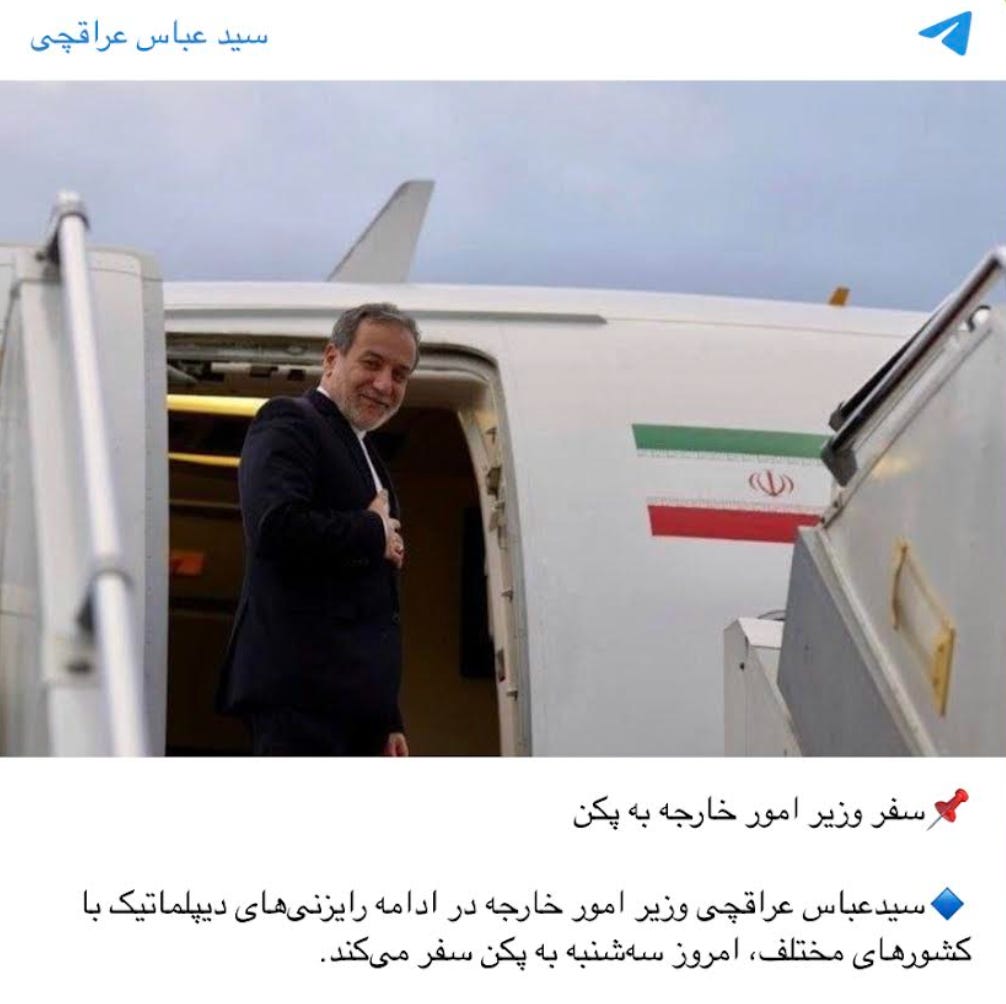
Iran’s foreign minister Abbas Araghchi announces that he is traveling to Beijing, China to meet with his counterparts.
South Korea says that a fire on a South Korean-operated vessel in the Strait had been fully extinguished.
A French (CMA CGM) container ship (San Antonio) was struck while transiting the Strait of Hormuz, injuring crew members and damaging the ship.
4 May:
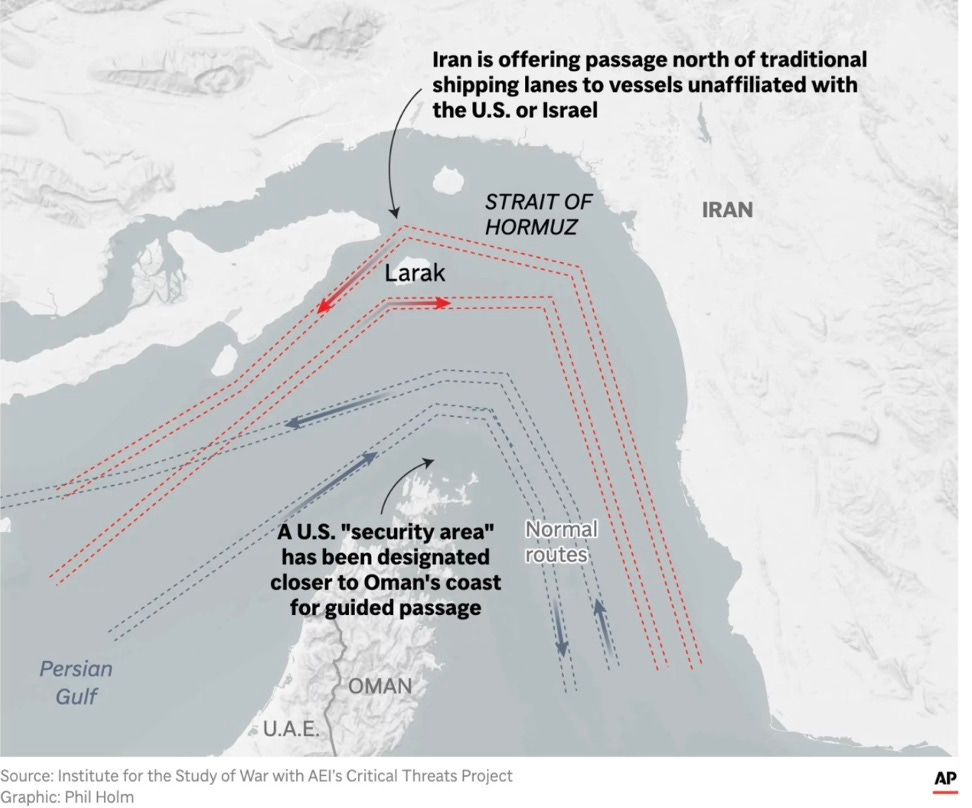
The U.S.-led Joint Maritime Information Center advises ships to cross the strait in Oman’s waters, saying it had set up an “enhanced security area”.
Trump threatens that Iran will be “blown off the face of the earth” if it attacks US ships passing through the Strait.
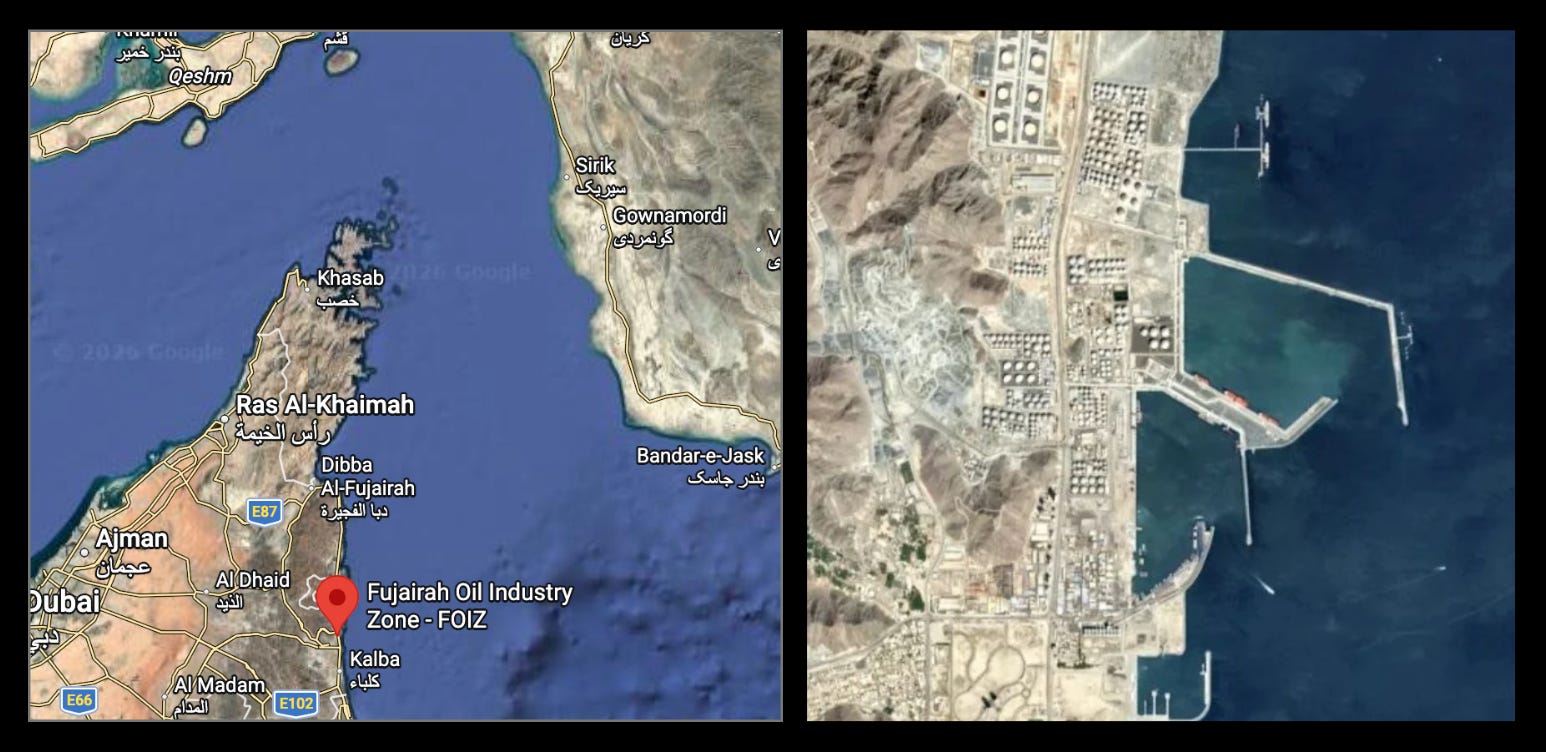
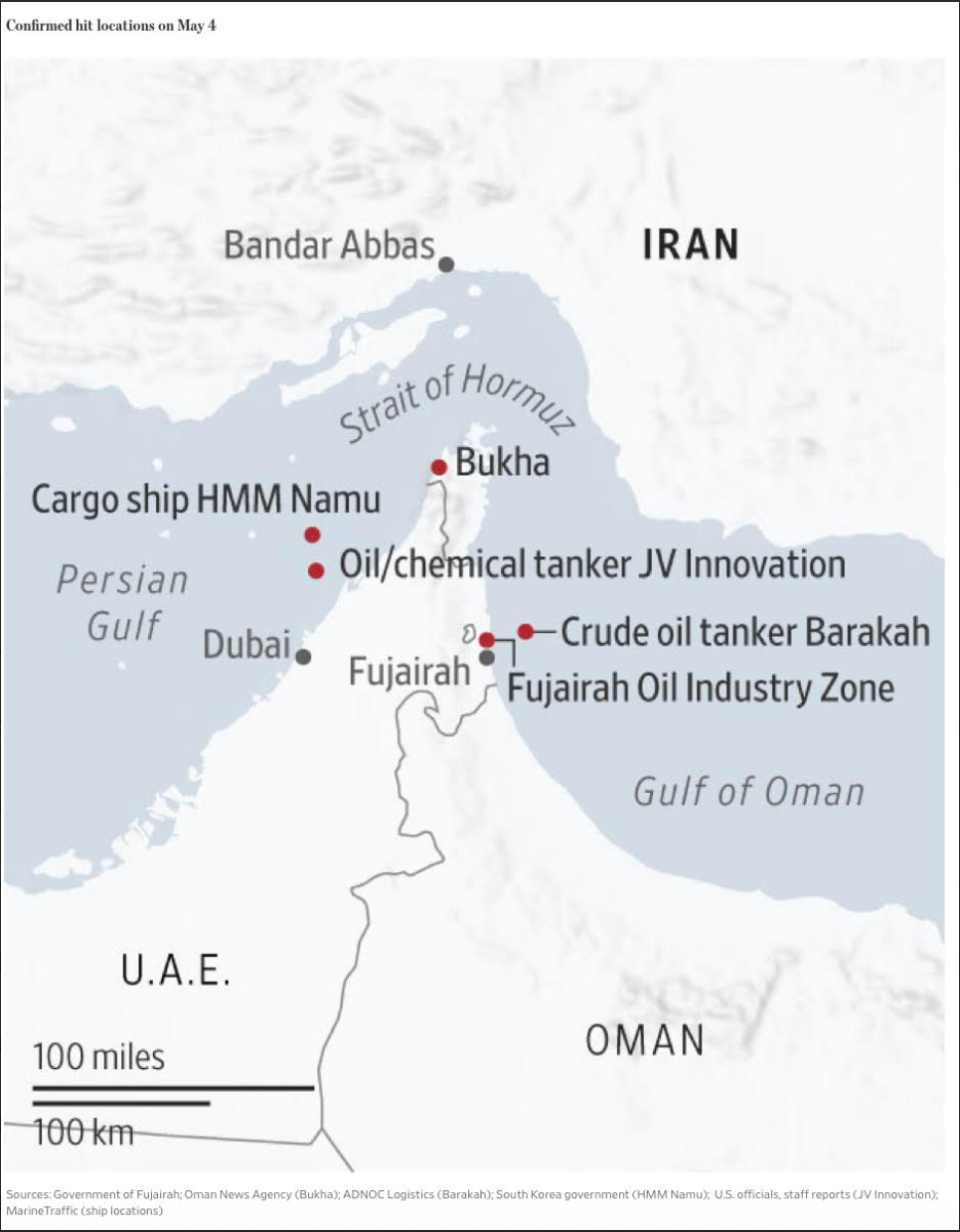
Fire breaks out at the Fujairah Oil Industry Zone in the UAE. UAE authorities say it was hit by an Iranian drone.
Note: The Fujairah Oil Industry Zone is located on the eastern seaboard of the UAE along the Gulf of Oman, giving it a strategic advantage of being 70 nautical miles outside the Strait of Hormuz. This allows Fujairah to move oil from Abu Dhabi’s fields—via the 1.5 million barrels per day (BPD) Abu Dhabi Crude Oil Pipeline—to international markets without passing through the Strait. Fujairah handles over 1.7 million BPD, roughly 1.7 percent of global daily oil demand. The site was also attacked by Iran on 14 March.
UAE Ministry of Defense statement: four cruise missiles were detected approaching the UAE from Iran. Three were successfully intercepted while the fourth fell into the sea.
Note: Iran has fired more than 2,800 drones and missiles at the UAE since 28 February this year. According to the UAE Ministry of Defense, in total, Iran fired 12 ballistic missiles, three cruise missiles and four drones at the UAE on 4 May.
Ash Sharq al-Awsat reports that Saudi Crown Prince Mohammed bid Salman, in a phone call with UAE President Sheikh Mohammed bin Zayed, condemned the Iranian attacks against the UAE and confirmed that Saudi Arabia stood by the UAE.
Note: Relations between Saudi Arabia and the UAE have deteriorated over the past several years over the wars in Yeman and Sudan and economic competition. On 1 May the UAE withdrew from OPEC, potentially deepening the rivalry.
Iran strikes Bukha, Oman, damaging a residential building. (unclear what type of weapons system was used in attack)
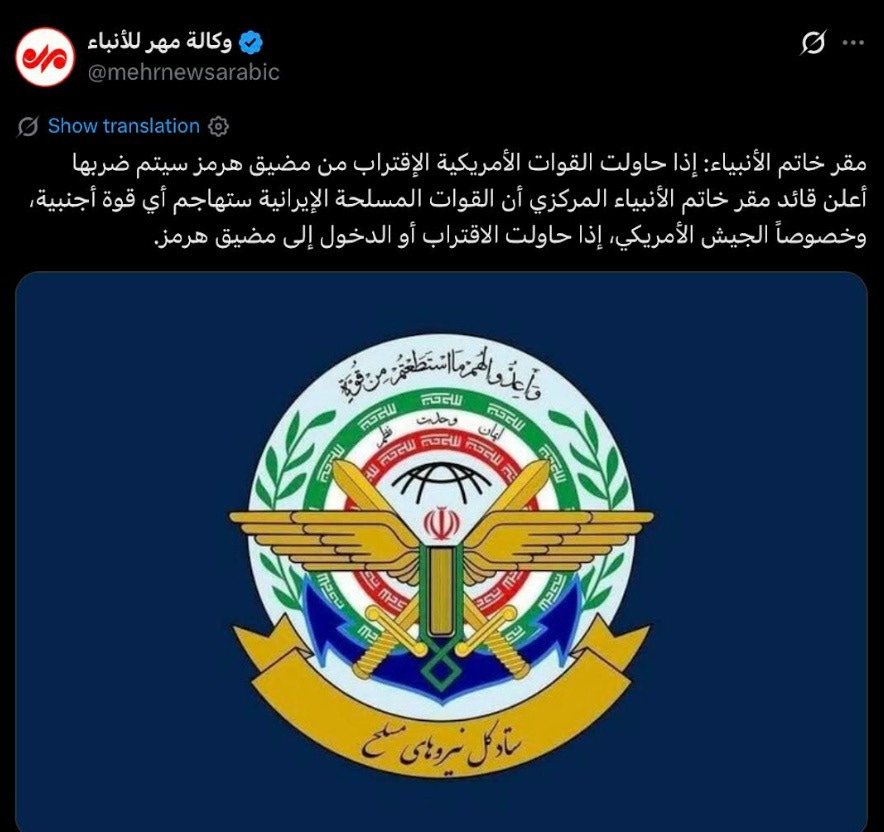
Khatam al-Anbiya Headquarters (Iran’s unified military command) releases a statement saying that if any U.S. forces approach the Strait, they will be struck.
IRGC releases a map demarcating its area of control in the Strait
Iran (IRGC) claims that it has denied a US Navy destroyer from entering the Strait of Hormuz by firing on it. CENTCOM denies this claim. CENTCOM leader Adm. Brad Cooper later confirmed that Iran fired at U.S. warships and the U.S. retaliated, destroying six Iranian small boats.
U.S. hands over the Iranian vessel Tosca along with its crew to Pakistan. The ship was intercepted earlier when it tried to breach the U.S. naval blockade.
The UAE strongly condemns an Iranian attack targeting a national oil tanker in the Strait of Hormuz operated by ADNOC. (Qatar’s Foreign Ministry also strongly condemns the attack.)
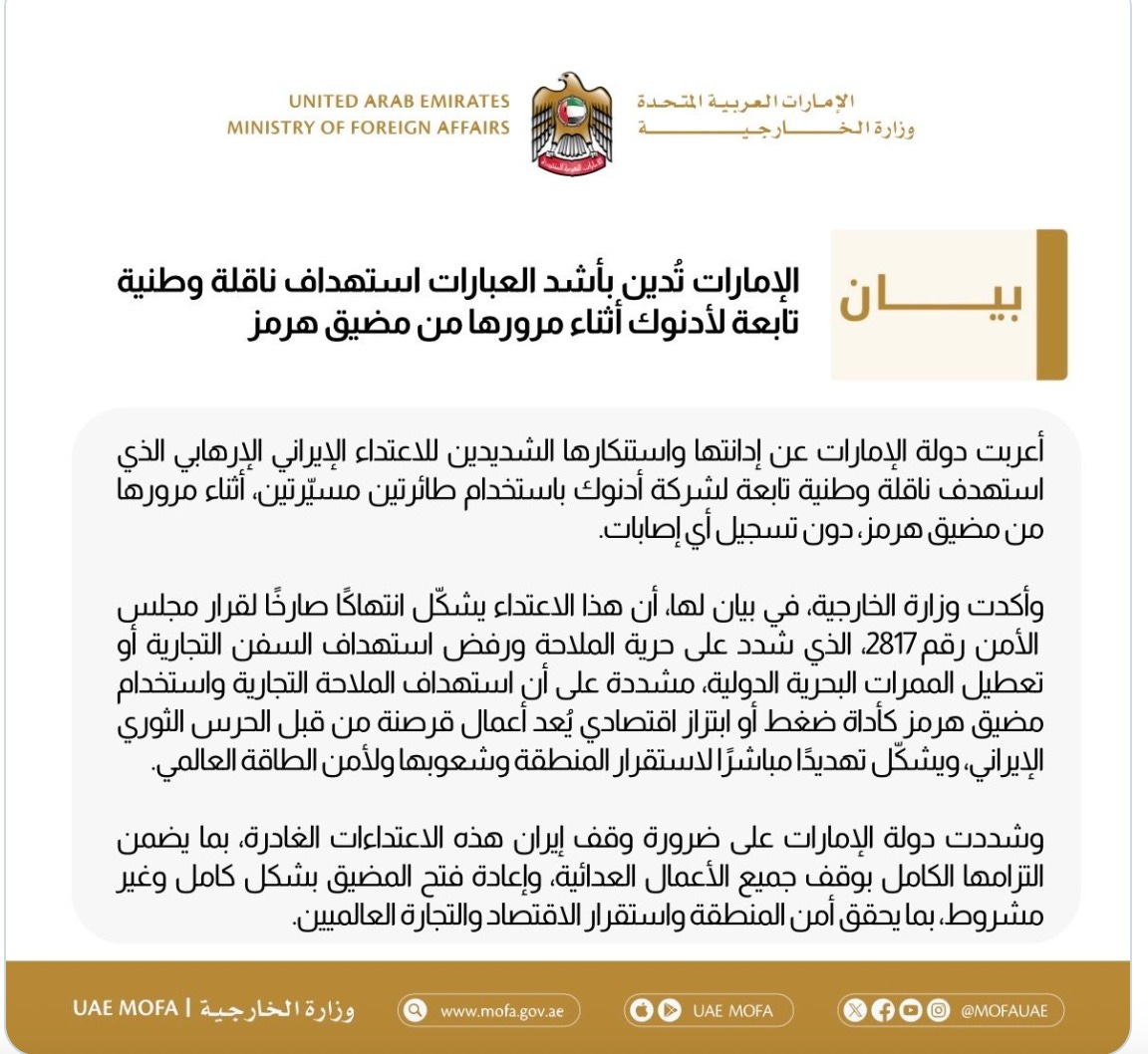
The Guardian reports that a South Korean-linked vessel was attacked in the Strait, but, as of 1000 EST this was unconfirmed by South Korean Government.
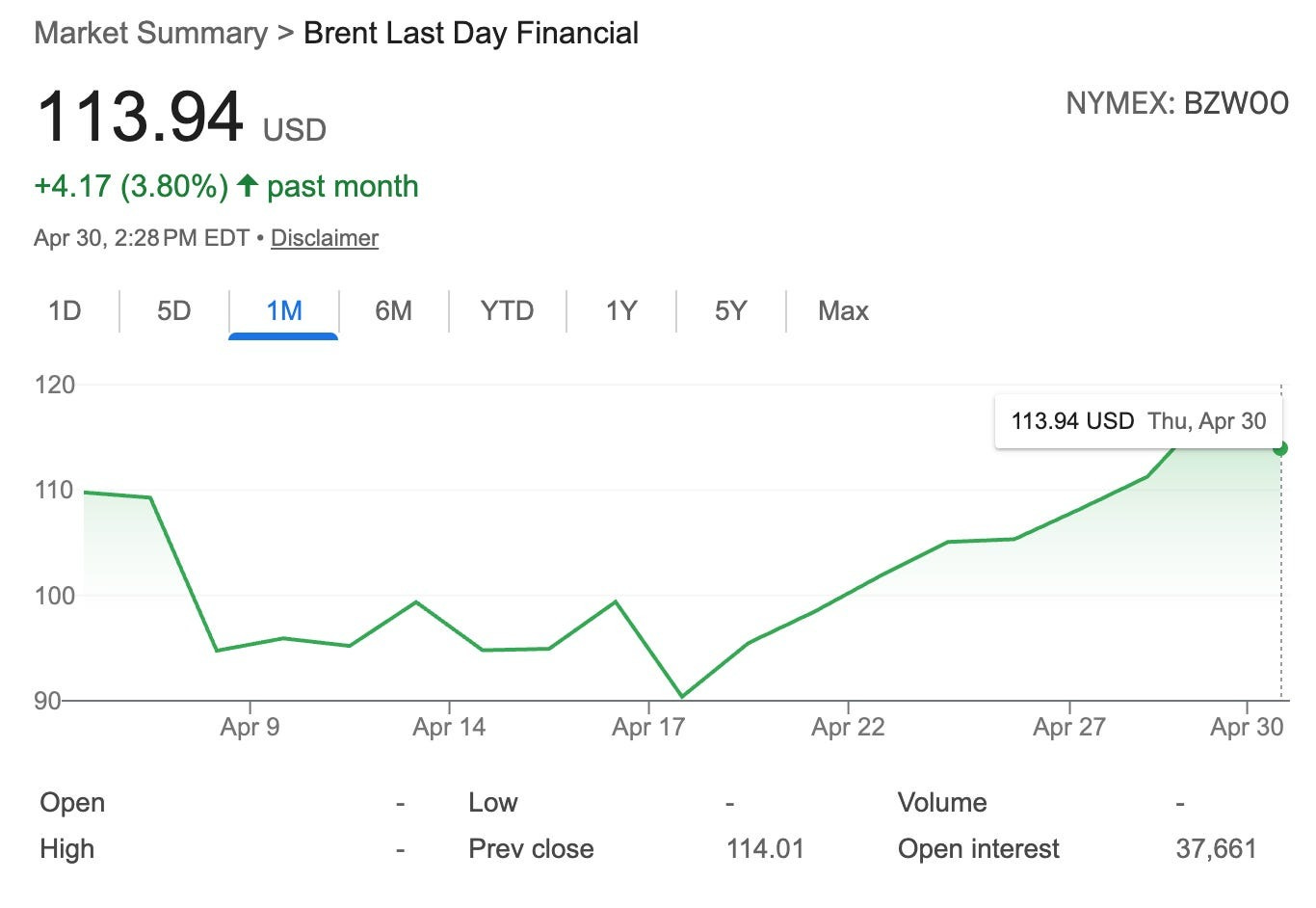
As of 0900 EST Brent Crude hovering around $110 a barrel:
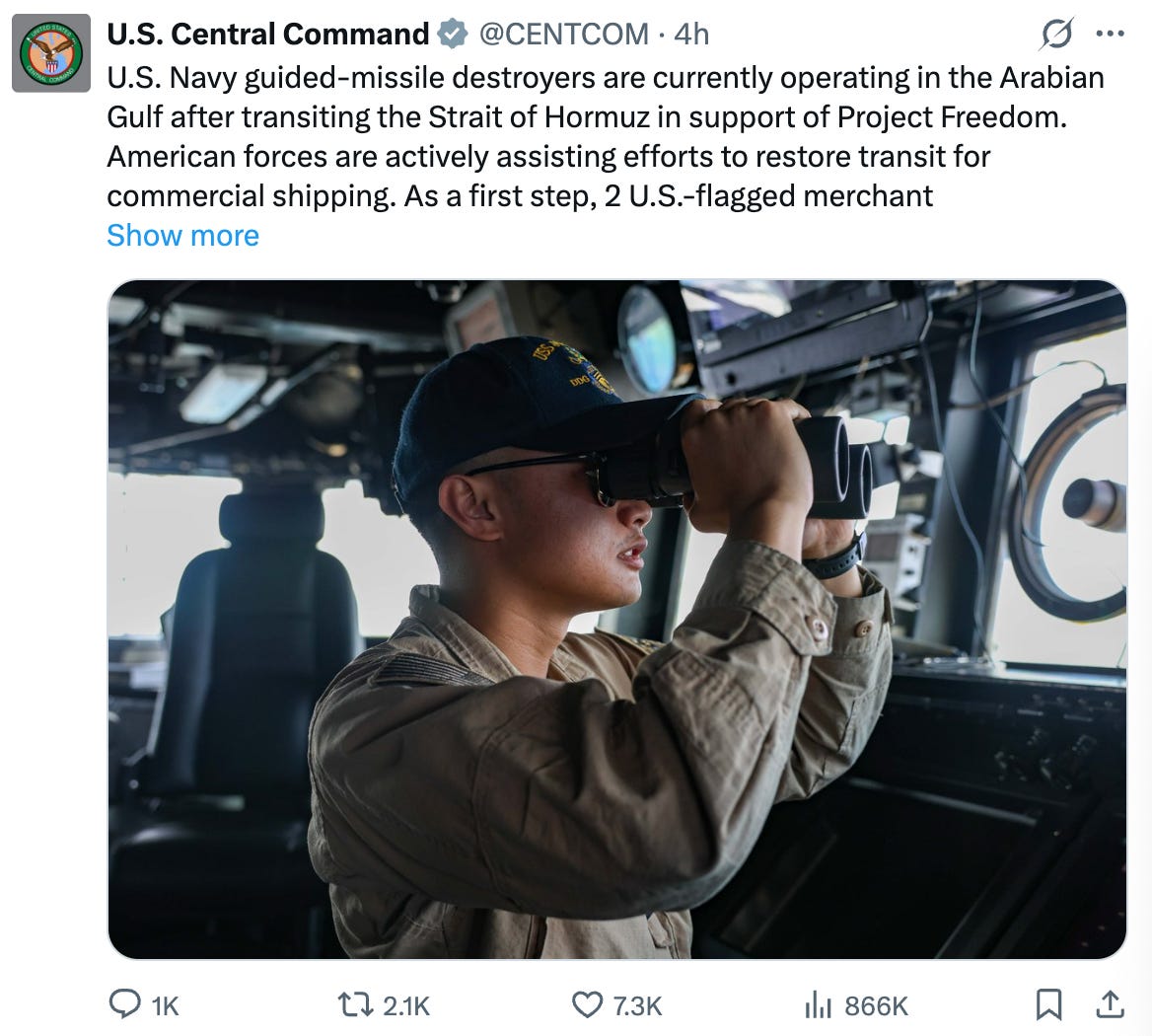
CENTCOM announces that 2 U.S.-flagged merchant vessels had safely transited the Strait.
Reuters and other sources report that Iranian Nobel Peace Prize laureate Narges Mohammadi was transferred from jail to a hospital because of a life-threatening heart condition. Mohammadi won the Nobel Peace in 2023 for her campaign to advance women’s rights in Iran and abolish the death penalty there.

3 May
In a Truth Social post president Trump announces “Project Freedom”, a plan for the US to guide stranded ships through the Strait of Hormuz.
Note: The reported numbers vary, but there are approximately 800 tankers and cargo vessels and likely double that number of smaller ships with approximately 20,000 individuals stranded in the Persian Gulf because of the Strait of Hormuz closure.
Note: According to the Wall Street Journal, rather than a direct escort mission, “Project Freedom” is, at this point, merely a U.S.-led coordination cell.

AVDD’s sole purpose is to fight for democracy and freedom, in America and throughout the world. But we need your support! If you enjoy AVDD’s content, please help us stay in the fight by subscribing to this Substack page, or consider a monetary donation. Thank you!!